
TL;DR — A sellable bridal collection is 3–4 core styles across heel heights, built on comfort lasts, in dyeable satin or lace — plus one flat option. Brides buy comfort they can stand in for ten hours; boutiques that grasp this win the category.
Bridal shoes look like a fashion category but behave like a comfort category. The customer wears the pair for ten to twelve hours on the most photographed day of her life — if the shoes hurt, nothing else about them matters. Boutiques that build their bridal range around this fact get referrals; those that buy purely on looks get one-time sales. Here is how we advise boutiques to structure a bridal collection.
The Core Four: What Every Bridal Range Needs
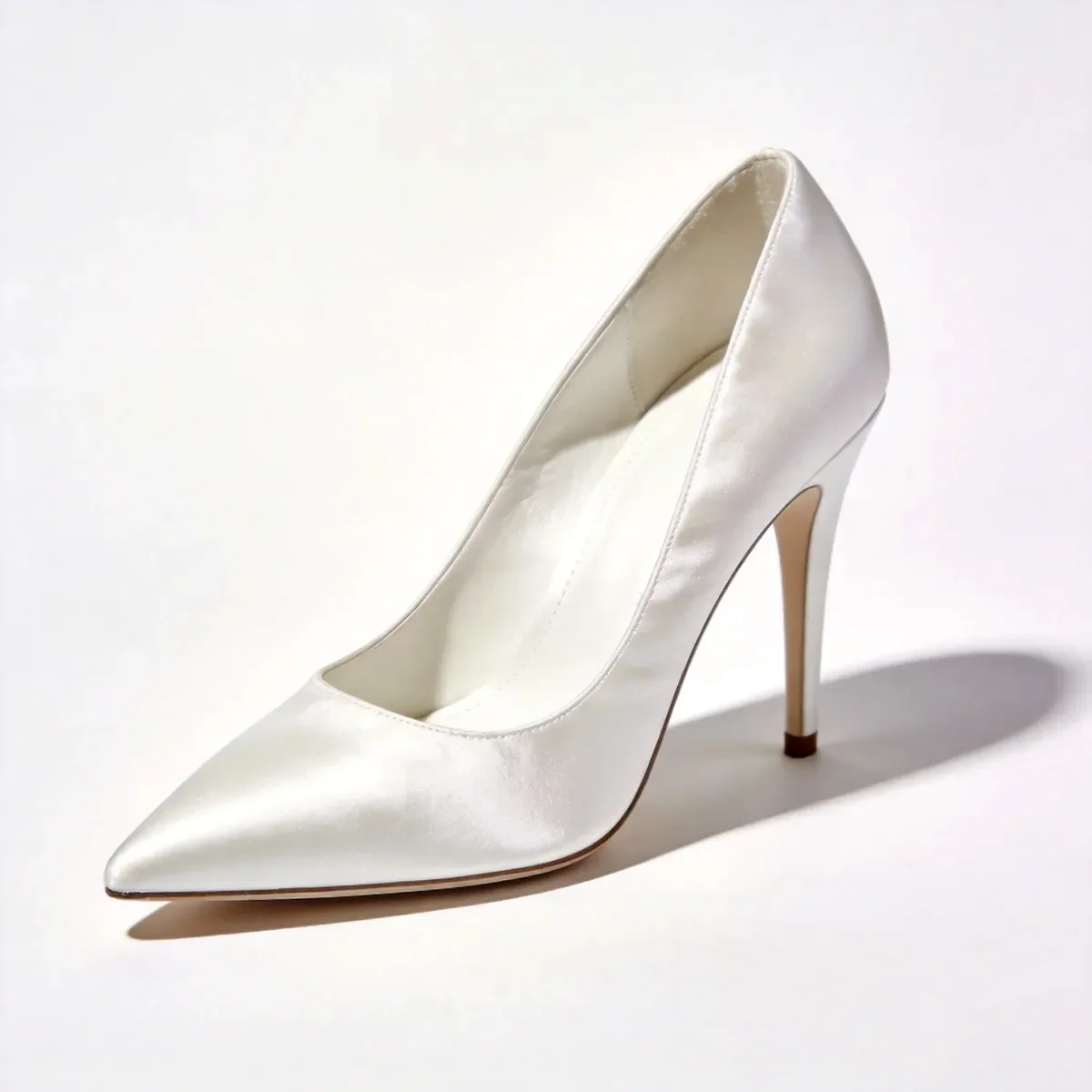
1. The classic satin pump. Pointed or almond toe, 6–8 cm heel, ivory or white satin. The anchor style every bride tries first. Specify dyeable satin — it unlocks color-matching services that dress boutiques love to offer.
2. The lace heel. Lace overlay on satin or mesh, usually 5–7 cm. Romantic, photographs beautifully, and matches lace-dress trends without competing with them.
3. The low block heel or slingback. 3–5 cm block heel, often pearl- or crystal-trimmed. This is the fastest-growing bridal segment — outdoor and garden weddings demand stability, and brides increasingly change into a lower pair for the reception.
4. The bridal flat. Ballet flat or pointed flat with embellishment. Some boutiques skip this and regret it: flats sell to tall brides, second-time brides, and as the "dancing pair" — plus they are the easiest fit sale in the category.
Materials: Satin, Lace and What Sits Underneath
Bridal satin is not one material. Polyester satin is affordable and scuff-resistant; silk satin has unmatched luster but spots easily and costs significantly more. Most boutiques stock polyester for the core range and offer silk as a premium option. Under the satin, the upper structure matters more than the surface: a soft foam-backed satin prevents the ridge lines that appear when satin is stretched directly over a hard puff. Lace styles need a stable base layer — lace alone has no structure, so it must be bonded to satin or fine mesh.
Embellishments — pearls, crystals, bows — should be stitched, not glued, wherever the shoe flexes. Glue-only crystals on the vamp crease are the number-one bridal quality complaint.
Comfort Is the Product
Three construction choices turn a bridal shoe from tolerable into wearable:
- Padded insoles — 3–5 mm foam under a sheepskin or fabric sock; invisible in photos, decisive by hour six
- Comfort lasts — a slightly roomier toe box than fashion lasts; brides' feet swell through the day
- Heel stability — block and flared heels outsell stilettos in bridal for a reason; where stilettos are wanted, a heel tip with a wider ground contact saves both lawns and ankles
Ordering Notes for Boutiques
Bridal sizes skew narrow in the middle of the range — most boutiques concentrate on EU36–39 and keep EU35 and EU41+ as order-in sizes. Embellishment variants (pearl vs crystal trim on the same base style) let you show eight styles while stocking four. Our bridal styles run at 100–200 pairs per style on existing patterns, with dyeable satin and custom trims available — workable for a boutique's first bridal season. Sampling takes 7–12 days, and embellishment samples are worth the wait: always approve the trim on the actual shoe, not from a trim card.
Building a Bridal Range?
Tell us your boutique's customer profile — we will propose a core bridal collection and quote sampling in 7–12 days.
Get a Wholesale Quote Send an Inquiry