
TL;DR — All-day commuting comfort comes from four construction details: a flexible outsole, a padded insole, a soft moisture-managing lining, and a toe box with real room. All four are visible at sample stage — if you know where to look.
"Comfortable flats" is one of the most searched phrases in women's footwear — and one of the most abused in marketing. Every factory claims comfort; few can show you where it lives in the shoe. As the people who build them, here is our honest map: four construction details decide whether a flat survives an all-day commute or gets kicked off under the desk by noon.
1. The Outsole Must Flex Where the Foot Flexes
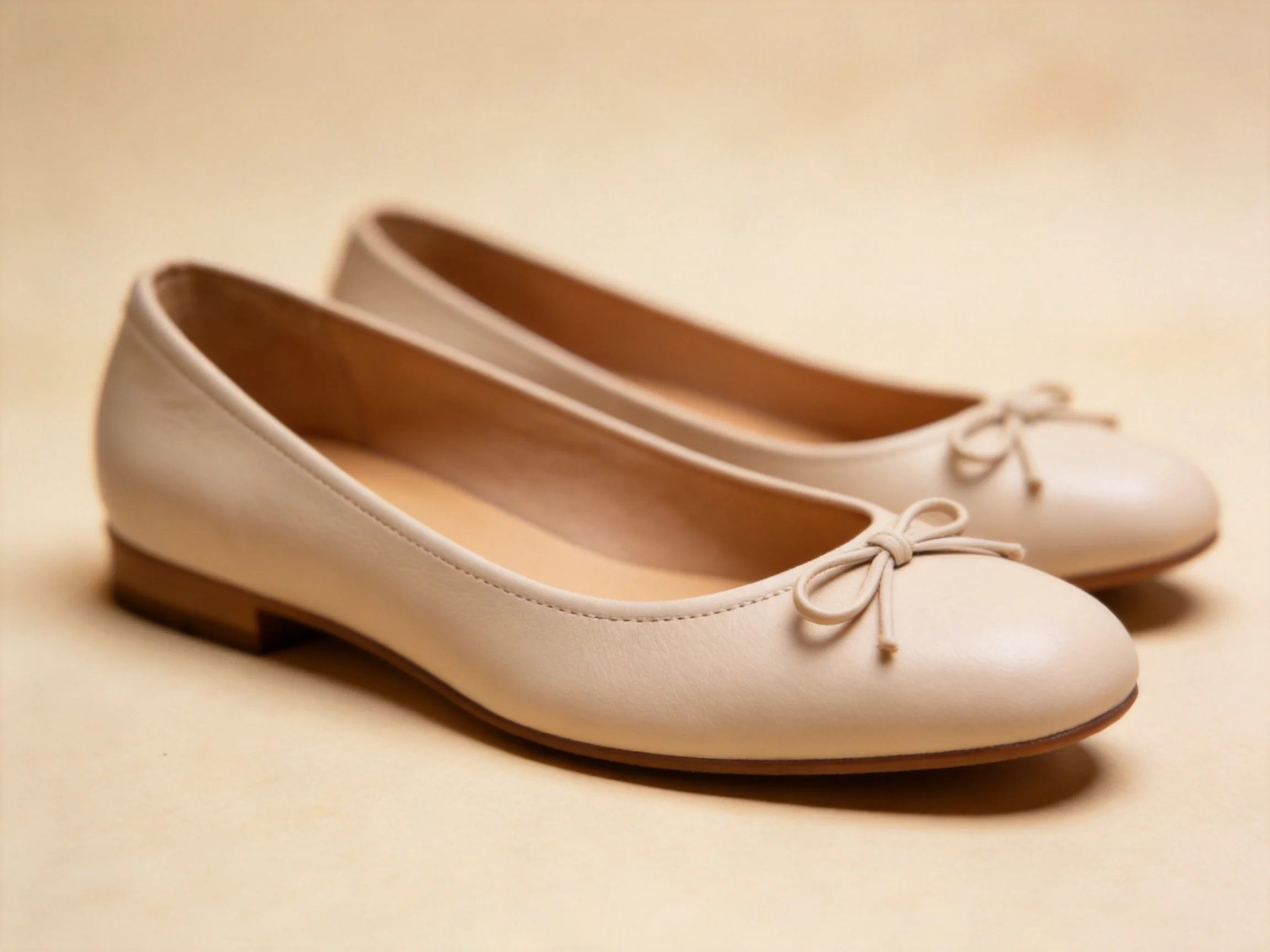
A foot bends at the ball — roughly where the toes meet the forefoot. If the outsole is stiff there, every step is a small fight, and by evening the wearer feels it in the arch and calf. Pick up the sample and bend it: it should fold at the ball with two fingers' pressure, not at the arch (a midsole that folds in the middle has no support at all). Thin rubber or TPR soles of 3–5 mm hit the sweet spot for commuters — flexible, quiet, and grippy on station tiles and office floors.
2. The Insole Is Where "Comfort" Actually Lives
Under the foot, the stack should be: insole board, 3–5 mm of foam padding, and a soft top cover. Cheap flats skip the foam entirely — the foot rests directly on a hard board, and no marketing language fixes that. Press your thumb into the insole at the heel and the ball: you should feel real give, not a hard surface under a thin fabric layer. For premium commuter lines, a sheepskin-topped padded insole is the single most noticeable upgrade — it manages moisture and temperature through a full day of wear.
3. The Lining Decides the Afternoon
Bare feet in flats mean the lining is in contact with skin for hours. PU linings trap heat and get sticky; fabric linings pill; sheepskin or soft leather linings manage moisture and reduce friction at the heel counter. The heel counter itself deserves a check: it should be firm enough to hold the heel but padded at the topline — an unpadded stiff counter is the classic cause of the first-week blister. For a broader view of upper and lining materials, see our leather types guide.
4. The Toe Box Needs Real Room
Feet swell through a commuting day — measurably, by late afternoon. A pointed fashion last that fits at 9am can pinch by 5pm. Commuter flats belong on lasts with an honest toe box: almond or round shapes, with enough vertical height that toes are not pressed against the upper. This is a last decision, not a size-up decision — sizing up to gain width only moves the flex point to the wrong place. Our guide to lasts explains why this choice is locked in before production starts.
Spec Notes for Buyers
- Specify the outsole flex point and material thickness, not just "flexible sole"
- Write insole padding (3–5 mm foam + top cover material) into the confirmation sheet
- Choose lining by climate: sheepskin for premium and cooler markets, breathable fabric for hot ones
- Test samples in the afternoon, on feet that have already walked — that is the fit your customer will live in
Ballet flats and soft commuter styles are pattern-mature for us: 100–200 pairs per style on existing lasts, with padding, lining and outsole options all customizable. The comfort details above are exactly what we walk through at sample approval — they are much cheaper to get right at sampling than to retrofit after the reviews come in.
Sourcing Commuter Styles?
Tell us your customer — office commuter, teacher, retail staff — and we will recommend constructions built for all-day wear.
Get a Wholesale Quote Send an Inquiry