
TL;DR — A real Latin dance shoe is defined by four specs: a suede (chrome leather) sole for controlled slide, a flexible shank, straps that lock the foot without pressure points, and the right heel for the dancer's level. All four are customizable in small production runs.
Dance shoes are precision equipment disguised as fashion. A Latin shoe has to grip enough to push off, slide enough to spin, flex enough to point, and hold the foot through movement that would destroy an ordinary sandal. Studios and dance brands ordering custom shoes need to know what to specify — because the difference between a dance shoe and a dance-looking shoe is entirely in these details.
1. The Sole: Chrome Leather, Never Rubber
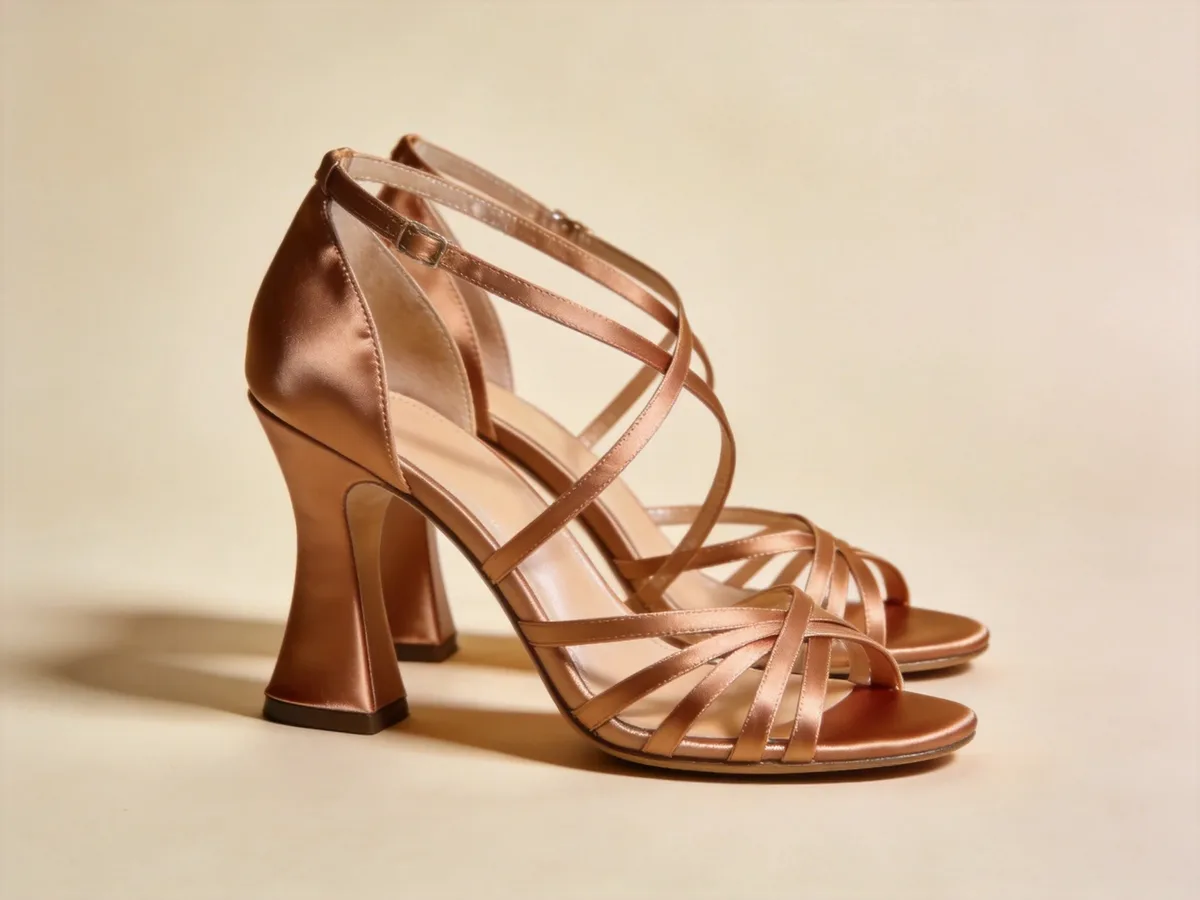
Latin dance soles are chrome leather with a suede nap — the brushed finish gives controlled friction: the dancer can pivot and spin, but the foot will not skate. Rubber soles grip too hard and torque the knee in spins; smooth leather soles slide unpredictably. The suede nap wears and compacts with use — dancers refresh it with a wire brush — so the nap quality and the sole's flex are what to check on a sample. Bend the shoe: it should flex at the ball almost as freely as a ballet flat.
2. The Shank: Flexible, Not Floppy
The shank is the spine inside the sole. In a Latin shoe it must support the arch on demi-pointe while letting the foot point fully. Steel shanks are too rigid; no shank at all leaves the dancer's arch unsupported through long sessions. Quality Latin shoes use a flexible leatherboard or composite shank tuned to the heel height — higher heels need proportionally more support. This is invisible from outside the shoe, which is exactly why cheap dance shoes get it wrong.
3. Straps: Lock the Foot, Free the Toes
Latin uppers are strappy by design, and strap engineering is the fit-critical part:
- Ankle or T-strap configurations must anchor the heel without pressure on the ankle bone — strap placement is set on the last, not adjusted after
- Buckles should be low-profile and quick-release; dancers change shoes between rounds
- Strap edges must be folded or bound — raw-cut satin straps fray within weeks
- Toe box stays open and soft; the toes spread for balance, so nothing across the forefoot can restrict them
4. The Heel: Match It to the Dancer
Heel height is a skill-level decision, not a fashion one. Practice and teaching shoes sit around 4 cm on a flared heel for stability; social dancers take 5–6.5 cm; competition styles reach 7.5 cm on slimmer profiles. The heel must be centered under the heel bone — a poorly seated heel makes balance work the dancer should not have to do. For custom orders, we build the same upper on multiple heel heights so a studio can outfit beginners and competitors in a matching style.
Ordering Custom for Studios and Brands
Custom dance shoes are practical in small runs: on existing patterns, we customize heel height and shape, strap configuration, materials (satin, patent, glitter, leather), colors and studio branding at 100–200 pairs per style. Studios typically standardize one or two house styles across heel heights; brands build a small range across levels. Sampling runs 7–12 days — and for dance shoes, the sample should be danced in, not just tried on: one rehearsal reveals more than any inspection table.
Outfitting a Studio or Dance Brand?
Tell us your dancers' level and style — we will propose heel and strap options and quote sampling in 7–12 days.
Get a Wholesale Quote Send an Inquiry