
TL;DR — PU footwear leaves the factory at a lower price, often 30–50% below a comparable leather style. But the factory-gate price is not the cost that matters: leather shoes typically last two to three times longer, generate fewer returns, and support a higher retail price point. PU is the right call for vegan positioning, disposable price points and short-life fashion; leather wins wherever the shoe has to survive a season and your reviews have to survive the year.
Every footwear buyer runs this calculation at least once: the PU version of a style quotes noticeably cheaper than the leather one, and the samples look almost identical. So why pay more? This is the comparison we walk through with buyers several times a month — written from the factory side, including the cases where we honestly recommend PU.
1. The Price Gap Is Real — but Smaller Than Retail Suggests
At the material level the gap is significant: PU synthetic leather is sold by the meter at a fraction of what cowhide costs per square foot, and it cuts with almost no waste because every roll is uniform — no scars, no belly edges, no grain direction to work around. A cutting line can plan PU layouts to the centimeter.
By the time that difference reaches the factory-gate price of a finished shoe, it has typically narrowed to a 30–50% gap on a comparable style — meaningful, but far smaller than the 2–3x difference you often see between PU and leather versions of the same silhouette at retail. Materials are only one line in the cost sheet; labor, outsoles, hardware and overhead barely change between the two. That compression matters for your pricing strategy: if your retail positioning can carry it, the upgrade to leather costs you less than your customers perceive it to be worth.
2. Where PU Genuinely Wins
We make both, so here is the honest case for PU:
- Vegan positioning. If your brand promise excludes animal products, the discussion ends here — your material is PU (or microfiber), and the job becomes finding a good one.
- Disposable price points. Event shoes, promotional runs, ultra-budget fast fashion worn a handful of times — when the expected life of the shoe is weeks, paying for a three-year material makes no sense.
- Effects leather cannot do. Mirror-bright patents, metallic finishes, extreme neon colors — PU coatings achieve these more easily and more consistently than finished leather.
- Absolute entry price. If your target retail price is under about $40, leather will squeeze your margin to nothing; PU is the rational choice.
3. Where Leather Wins the Money Back
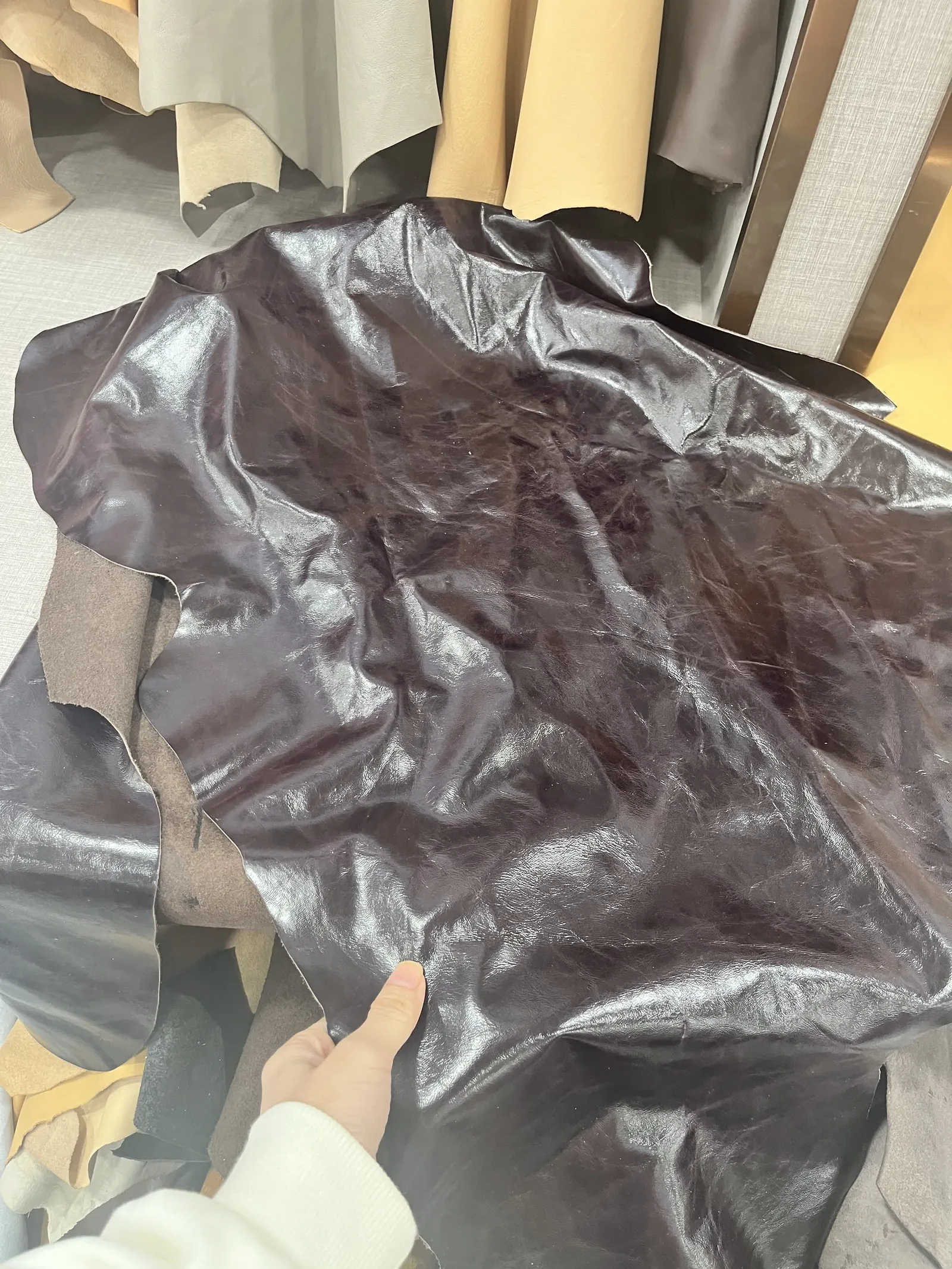
The leather case is built on four numbers that show up after the sale, not before it:
- Lifespan. A leather upper typically outlasts a PU one by two to three times under daily wear. PU fails at the flex points first — the coating creases hard, then cracks; leather softens and molds to the foot instead.
- Breathability — and therefore returns. Leather wicks moisture; PU does not. "Uncomfortable / sweaty / gave me blisters" is one of the most common return reasons in footwear, and it maps directly to material choice.
- Aging. A three-month-old leather shoe looks broken-in; a three-month-old PU shoe looks used-up. For any brand that lives on reviews and repeat buyers, this difference compounds.
- Pricing power. "Genuine leather" on the product page supports a higher price point and a different customer expectation — the material itself is a marketing asset.
One caveat worth knowing: not all "genuine leather" is equal. The label legally covers everything from full-grain to heavily coated split leather, and the durability story above belongs to the better grades. If a supplier's leather price seems too good, ask which grade — our guide to top-grain versus split leather covers the fold test that tells them apart.
4. The Real Math: Cost Per Wear, Return Rate, Review Score
The factory-gate comparison misleads because it prices the shoe at the moment of purchase. Your actual cost per sold-and-kept pair looks more like this:
- Unit cost ÷ months of service — a shoe that survives 12 months at $14 beats a shoe that survives 4 months at $8, and the customer wearing it knows the difference by month five.
- Return rate × handling cost — every returned pair costs you shipping, restocking labor and often the unit itself; a material-driven return rate two points higher can erase a 30% material saving on its own.
- Review trajectory — comfort complaints arrive weeks after purchase and sit on your listing permanently; they tax every future conversion, not just the returned pairs.
None of this means PU is a bad material — it means the comparison only becomes honest when you run it past the point of sale, not at the quotation stage.
5. How to Make Sure You Get What You Paid For
Modern "leather-feel" PU is good enough to fool a quick hand check, so verify the material before bulk production, not after:
- Look at the cut edge. Leather shows a fibrous cross-section of interlocked collagen; PU shows a clean, layered sandwich — coating on top, fabric backing below.
- Check the back side. Genuine leather has a suede-like fibrous reverse; PU usually has a woven or knitted textile backing.
- Flex it sharply. Leather forms fine, soft wrinkles that relax; PU forms sharper creases that linger in the coating.
- Write the spec into the order. "Genuine cowhide upper, top-grain" is enforceable at inspection; "leather upper" is a loophole. Approve a sealed sample and state that bulk production must match it — the same discipline we recommend in our sampling and approval guide.
If your market is the EU, material choice has a compliance dimension too: phthalates are the classic PU failure point under REACH, while leather needs chromium VI and azo dye control. Either way, a third-party report on the actual batch beats a declaration — see what REACH testing actually covers.
6. What We Tell Our Buyers
Our advice is usually a framework, not a verdict. Work backwards from your target retail price: below roughly $40, take PU and spend the saving on better outsoles; above about $60, leather starts paying for itself in returns and reviews; in between, run the numbers on your specific return rate. And if you are torn on a specific style, ask us to sample both material paths — one upper in leather, one in PU, same last — and compare them in hand. That is a normal request, and it costs you one extra sample, not a wrong container.
At a Glance
- Factory-gate gap: PU typically runs 30–50% below a comparable leather style — smaller than the retail gap suggests
- Choose PU for: vegan lines, disposable price points (under ~$40 retail), special coatings, very short product life
- Choose leather for: anything that must last a season — roughly 2–3x lifespan, fewer comfort-driven returns, real pricing power
- The honest math: unit cost ÷ months of service, plus return rate × handling cost, plus the review trajectory
- Verify the material: cut edge, back side, flex test — and write the leather grade into the order with a sealed sample
- Compliance note: PU's classic REACH failure point is phthalates; leather's are chromium VI and azo dyes — test the actual batch either way
Questions Buyers Ask
"Can PU shoes pass EU REACH testing?"
Yes, good PU can pass — but phthalates are the classic PU failure point, and cheap coated fabrics fail more often than leather does on azo dyes. Whatever material you choose, ask for a third-party lab report on the actual production material, not a generic declaration.
"How cheap can a genuine leather shoe get?"
It depends on the style and the leather grade — a simple unlined flat in split-grade leather costs far less than a lined boot in top-grain. If a quote for "genuine leather" lands close to PU territory, ask which leather grade and which parts of the shoe it covers; the answer is usually in the lining and the insole.
"Will my customers actually notice the difference?"
Not on day one — that is exactly the trap. The difference shows up around month three: PU creases hard and cracks at flex points, while leather softens and molds to the foot. Your return rate and your review section will notice before your eyes do.
Compare Both Material Paths on Real Numbers
Send your target retail price and style list — we will quote the leather and PU versions side by side, with samples of both if you want them in hand.
Get a Wholesale Quote Send an Inquiry