
TL;DR — Loafers are the safest high-margin category in women's and men's footwear: five core variants cover most markets, but because there are no laces, fit lives or dies in the last — always sample on the production last before committing.
Ask any experienced shoe buyer which category they would keep if they could only keep one, and most will say loafers. They sell across genders, ages and occasions; they carry healthy margins; and the construction is mature enough that quality is predictable. But loafers have one hidden trap that catches first-time buyers: with no laces or straps to adjust, the last alone decides whether the shoe stays on the foot. This handbook covers the variants, the fit problem, and how to spec a loafer line that sells.
The Five Core Variants
Penny loafers — the saddle-strap classic. The most versatile variant: office, campus, casual. Safest first style for any market.
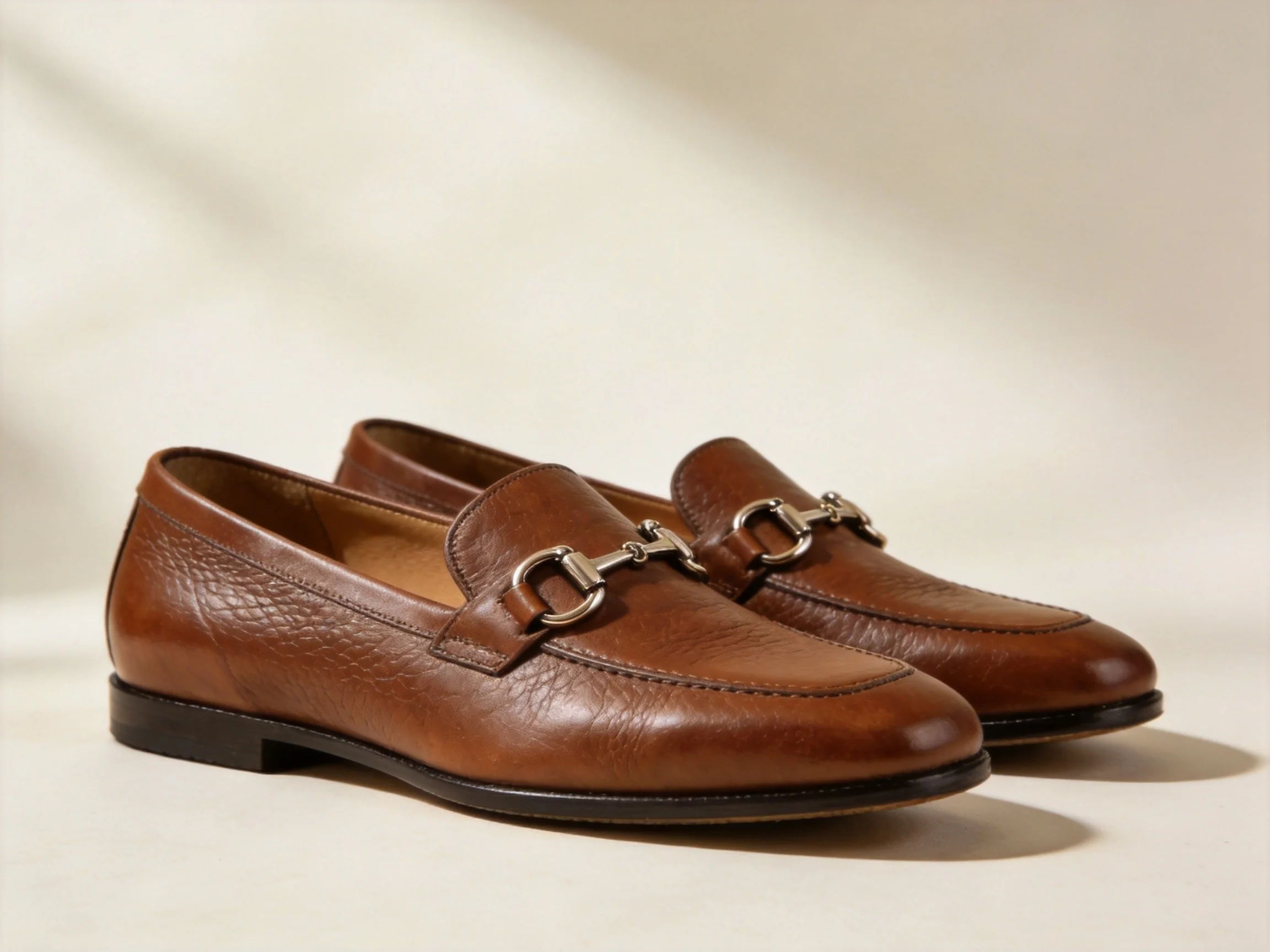
Horsebit loafers — the metal-snaffle style. Reads premium and pairs with tailoring; hardware quality is the tell, so specify solid-feel bits with clean plating.
Tassel loafers — decorative leather tassels on the vamp. Slightly dressier, strong in men's lines and preppy women's styling.
Platform loafers — chunky soles on classic uppers. The current growth variant in women's; needs a last built for the platform pitch, not a standard last on a thick sole.
Soft-soled / driving loafers — unstructured, flexible, nubbed or thin soles. Comfort-led; sells on hand-feel, so leather softness matters more than structure.
The Fit Problem: Slip-On Means No Forgiveness
A lace-up shoe tolerates an imperfect last — the wearer adjusts. A loafer does not. If the heel cup is too wide, the shoe slips; if the instep is too low, it bites; if the topline grips too hard at the sides, it rubs the ankle bone. All three are last dimensions, fixed before a single pair is cut. This is why we insist buyers approve loafer samples in their full size run logic: a sample that fits a EU37 foot proves the shape, but the grading across sizes must preserve the heel-to-instep relationship. Our guide to shoe lasts explains what to check.
Practical test at sample stage: wear the sample for a full day, on bare feet and with thin socks. Heel lift beyond roughly 5 mm when walking means the last is wrong for your market — no insole padding fixes a slipping heel permanently.
Construction and Material Notes
- Uppers — top-grain cowhide for structure; sheepskin nappa for soft-soled comfort styles; suede for casual lines (see the leather types guide)
- Linings — sheepskin lining is the single upgrade customers notice most in a slip-on; it manages moisture and eliminates the "sticky" feel of leather on bare skin
- Toe puffs — penny and horsebit styles need a firm puff to hold the apron shape; soft-soled styles skip it deliberately
- Outsoles — leather-look rubber for durability, real leather soles for dress lines, nubbed rubber for driving styles; never specify leather soles for work or wet climates
Spec'ing Your First Loafer Line
The pattern that works for small brands: start with two variants — one classic (penny or horsebit in black and brown top-grain) and one trend piece (platform or soft-soled in suede). At 100–200 pairs per style, that is a controlled test with real sell-through data. Loafers also grade well into men's sizing if your line expands later — the same constructions carry over, which is why they anchor so many of our catalog styles.
Planning a Loafer Line?
Browse our loafer catalog or send reference styles — sampling in 7–12 days, low MOQ for existing patterns.
Get a Wholesale Quote Send an Inquiry