
Ask any experienced footwear buyer what keeps them up at night, and the answer is rarely price — it is opening a carton at their warehouse only to find defects that should have been caught at the factory.
A loose stitch on a sample is a conversation; the same loose stitch across 300 pairs is a claim, a discount, or a lost season.
That is why, as a leather shoe manufacturer, we treat quality control as a process that runs through the entire production line — not a single checkpoint at the end. In this article we walk you through every inspection stage a pair of shoes passes at our Chengdu factory — from the moment a leather hide arrives to the moment the carton is sealed. Whether your order is 100 pairs or 1,000, the process is the same.
Step 1: Leather & Material Inspection
Every QC process starts before a single shoe is made. When leather, lining materials, insoles, outsoles and hardware arrive at our warehouse, they go through incoming inspection first:
- Leather hides: checked under bright task lighting for scars, insect bites, wrinkles, color variation and thickness. Natural leather is never uniform, so we grade each hide and mark which areas can be used for vamps (the most visible part) and which go to less visible components.
- Outsoles and insoles: checked for hardness, flexibility and bonding surface quality.
- Hardware: buckles, zippers and eyelets are sampled for plating quality and function.
Materials that fail incoming inspection are returned to the supplier — they never enter the cutting room, because no amount of later inspection can fix a shoe made from a flawed hide. You can see the range of styles these materials become in the leather styles in our catalog.
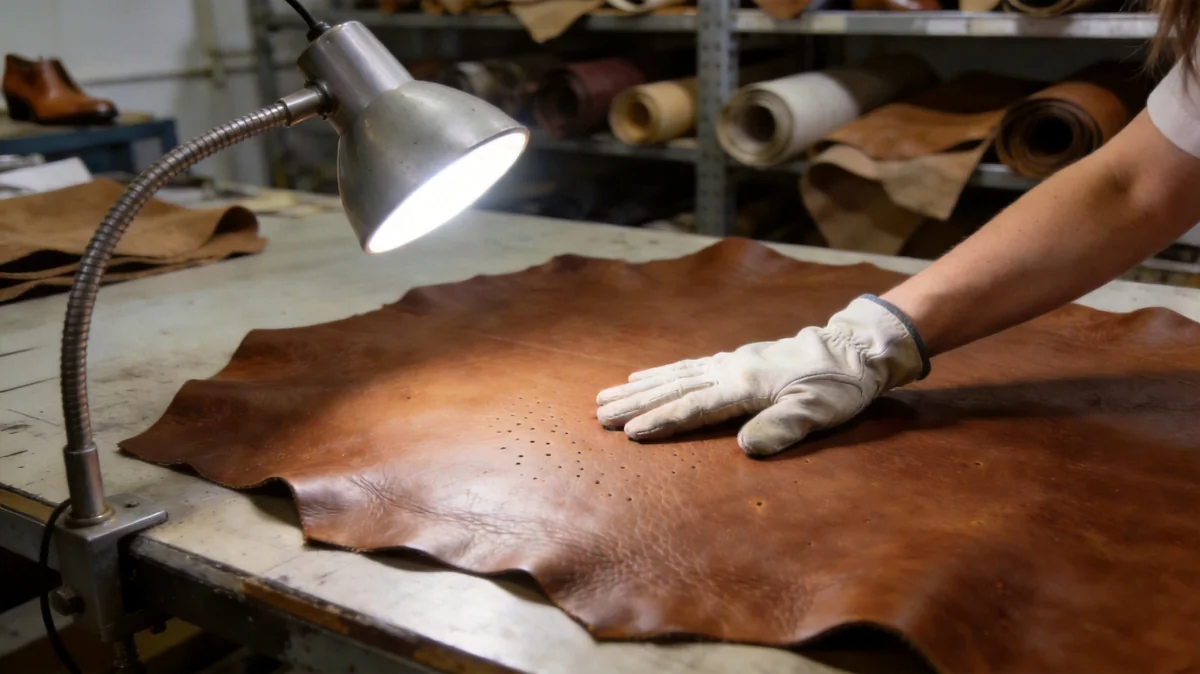
Step 2: Cutting
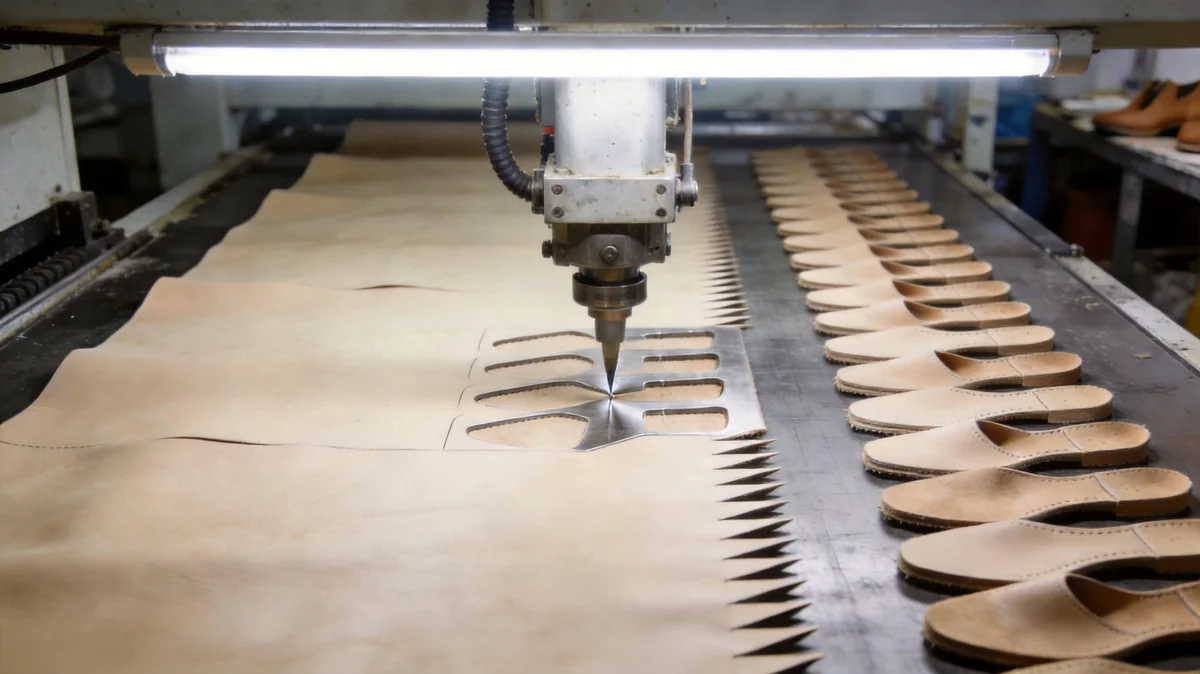
Cutting is where material quality meets precision. Our operators work around the graded areas marked during material inspection, so visible defects are cut around — not into — your shoes.
For repeat orders and larger runs we use CNC cutting for consistent shapes; for complex patterns and small runs, experienced cutters work by hand. Cut pieces are spot-checked against pattern dimensions before they move to the stitching department. A batch of miscut pieces caught here costs minutes; caught later, it costs a production day.
Step 3: Stitching and In-Line Checks
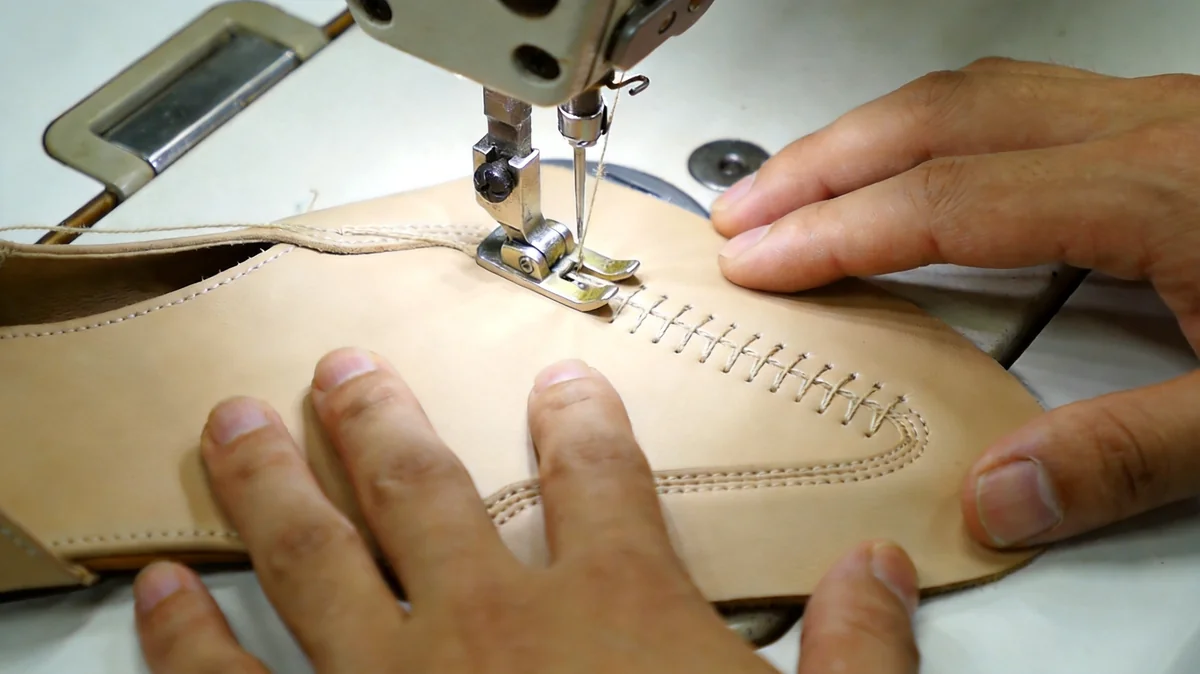
Stitching is where most visible quality issues are born — and where in-line QC earns its keep. During production, line supervisors walk the floor and check work-in-progress uppers every two hours:
- Stitch density and spacing: stitches per inch must match the approved sample.
- Skipped or broken stitches: any piece with a skipped stitch is pulled immediately.
- Oil stains and glue marks: pieces are checked for machine oil and adhesive contamination.
- Symmetry: decorative stitching and perforation patterns must match left to right.
Defective pieces are isolated in a red-bin system — they physically cannot continue down the line. This is especially important for styles where stitching is part of the design, like our loafer line, where the apron stitch is the first thing a customer sees.
Step 4: Lasting and Sole Attachment
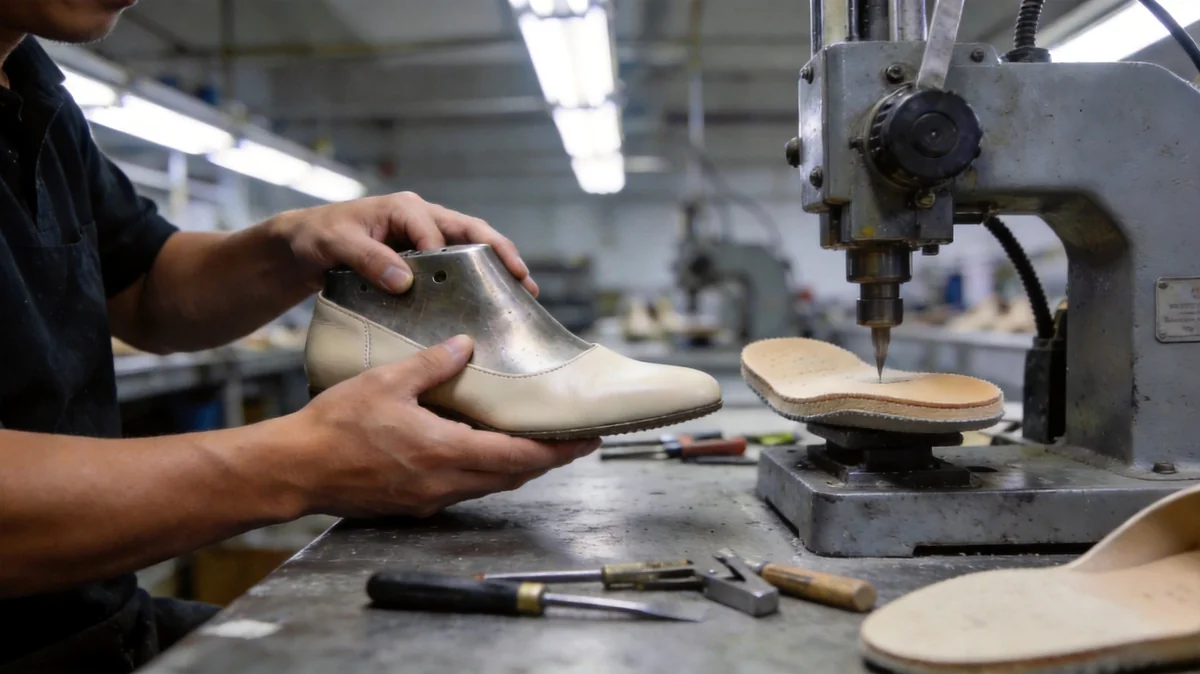
At the lasting stage the flat upper becomes a three-dimensional shoe. QC here focuses on shape and structure:
- Shape on the last: the upper must sit evenly, with no pulling or wrinkles at the toe and heel.
- Sole bonding: adhesive coverage, press time and bonding strength are checked per batch.
- Pair matching: left and right shoes are compared for height, toe shape and heel position — a mismatched pair is one of the most common buyer complaints in women's footwear.
Step 5: Final Lamp Inspection — 100% Check on Small Orders
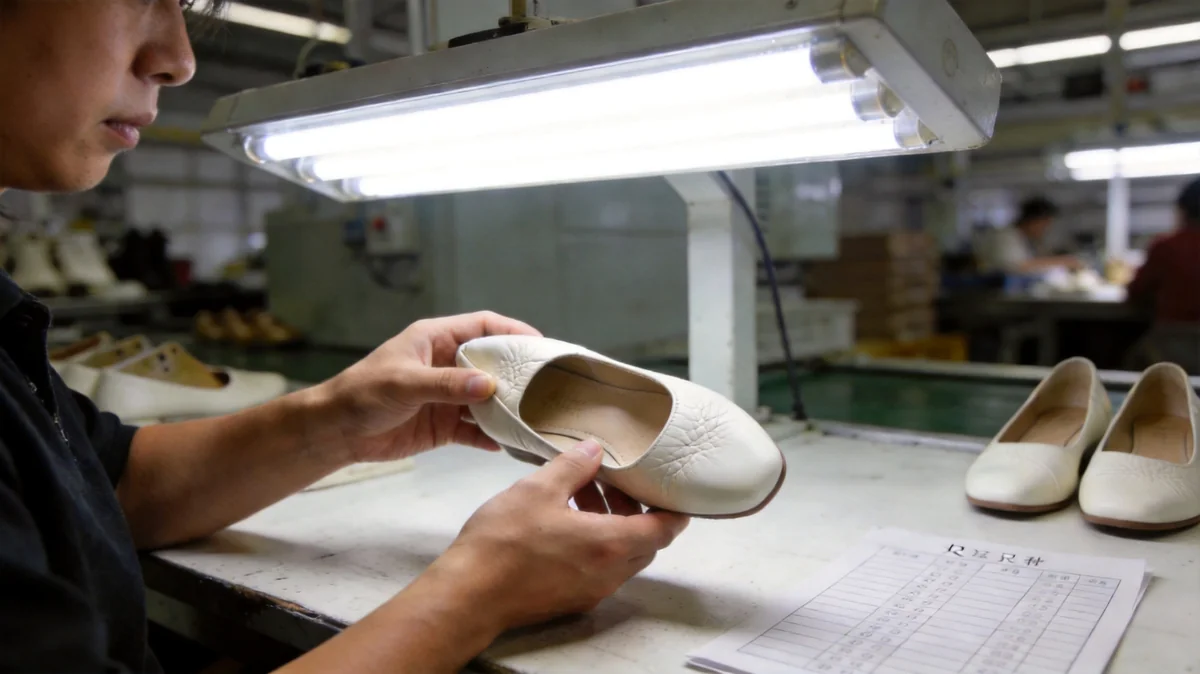
Every finished pair passes through our final inspection station — a dedicated bench with bright, color-accurate lighting. For small and medium orders (100–200 pairs), this is a 100% inspection, not a sampling. Inspectors check each pair for:
- Color matching between left and right shoe, and against the approved standard
- Surface issues: scratches, stains, wrinkles, loose threads
- Inside the shoe: foreign objects, rough edges, insole placement
- Function: buckles, zippers, elastics and straps
For larger orders, we follow an agreed AQL standard (AQL 2.5 for major defects is our common practice), and inspection records can be provided upon request. Delicate light-colored styles — think women's ballet flats in cream or ivory — get extra attention here because even a faint glue mark shows.
Step 6: Pre-Packing Check
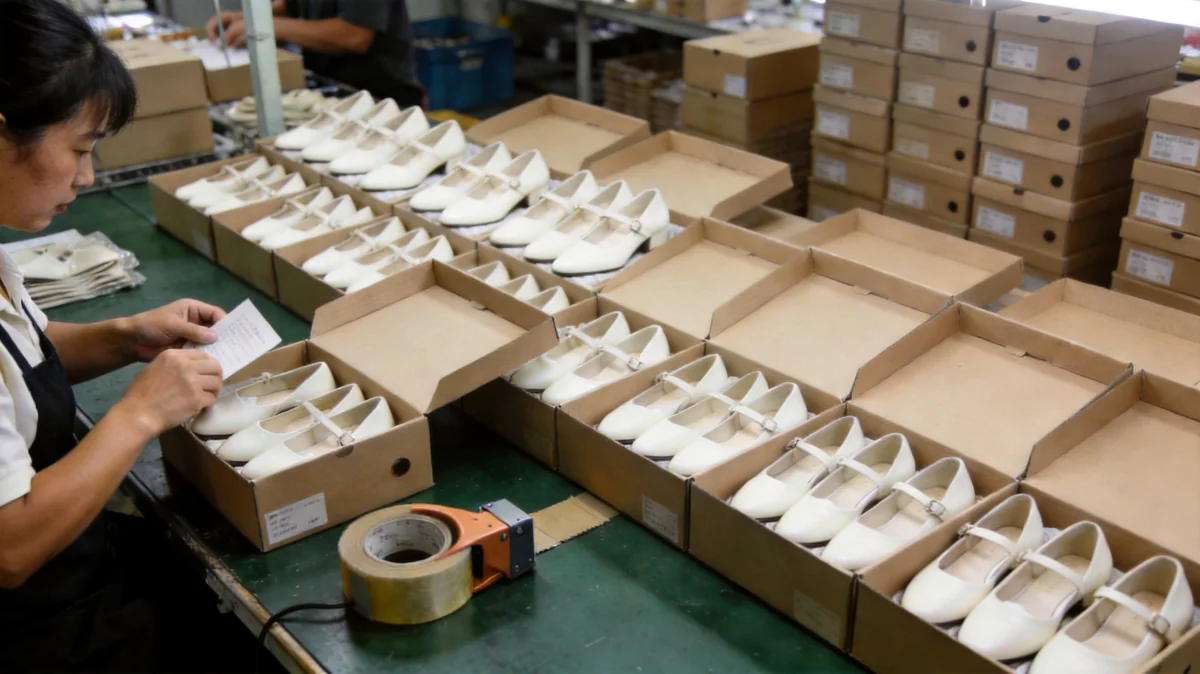
The last checkpoint happens at the packing table. Before cartons are sealed, we verify:
- Size run and quantity: cartons are counted against the packing list, pair by pair.
- Box labels: style, size, color and PO number match your order confirmation.
- Protection: tissue, desiccant packs and inner supports are in place so shoes arrive in selling condition.
We photograph packed cartons before shipping, so there is a visual record of what left the factory and in what condition.
What This Means for Your OEM/ODM Order
A documented, step-by-step QC process is not a marketing page — it is what keeps your landed cost predictable. In practice, here is what you can expect when working with us:
- 100% final inspection on small and medium orders, AQL-based inspection on large runs
- QC photos and reports available on request before shipment
- Third-party inspection welcome — SGS, TÜV or your own agent can visit during production or before loading
- A clear remedy policy if defects slip through: replacement or credit, confirmed per order
If you are comparing factories, ask each one to describe their QC stages in detail. The factories that actually run these steps can answer quickly — and specifically.