TL;DR — Japan is a high-expectation, high-duty footwear market: leather shoes carry some of the country's steepest tariff lines, and retail quality standards leave no room for sloppy finishing. The process itself is standard — factory vetting, sampling, sealed approval, production, inspection, shipping, customs clearance — but two Japan-specific levers matter: RCEP preferential tariffs with the correct certificate of origin, and an inspection plan matched to Japanese retail expectations.
Japanese buyers are some of the most detail-driven footwear customers in the world — and Japan's tariff schedule treats leather shoes accordingly. Neither is a reason to stay away; both are reasons to prepare properly. This is the full process as we see it from the factory side, with the Japan-specific steps flagged.
1. Why Japan Is Different
Three things set Japan apart from other export markets for leather footwear:
- Quality expectations. Japanese retail buyers inspect stitching, glue lines, color consistency and packaging at a level of detail that surprises first-time exporters. A loose thread that passes unnoticed elsewhere gets the whole carton flagged in Japan.
- Inspection culture. Third-party inspection companies (検品会社) are a mature industry in Japan, and inspection — pre-shipment or on arrival — is standard practice, not a sign of distrust.
- Duty structure. Leather footwear sits among Japan's most protected product categories, with tariff lines far above general goods. This shapes landed cost more than any other line item and makes tariff planning a real competitive lever.
2. The Process, End to End
The mechanics of importing from China to Japan follow the standard footwear sourcing sequence, covered step by step in our 7-point buyer checklist:
- Vet the factory — business license, export history, production line reality. Our five verification questions work in any language.
- Sample and approve — development samples in 7–12 days for new designs, faster for existing styles; approve against the 15-point checklist and seal reference samples.
- Contract and terms — confirm the trade term (FOB, CIF or other), payment rhythm (deposit plus balance before shipment, confirmed per order), and the inspection standard in writing.
- Production and QC — bulk production for trial-to-standard orders runs about 20–35 days after sample approval; pair-by-pair final inspection before packing.
- Shipping — Chengdu to Japanese ports by sea is the norm for footwear; air freight for urgent small lots. Shoes are bulky — carton dimensions drive freight cost.
- Customs clearance in Japan — a licensed customs broker (通関業者) handles the declaration; you pay duty plus consumption tax at import.
- Arrival inspection and launch — many Japanese buyers run an arrival inspection before goods go to retail channels.
3. Duties, Taxes and the RCEP Lever
Footwear duty planning deserves its own section because the numbers are material. Leather footwear tariff lines in Japan are high — some carry a specific per-pair duty element on top of ad valorem rates — and the exact rate depends on your HS classification, which turns on details like upper material and construction. Two practical consequences:
- Classify before you price. Confirm the HS code and current duty rate with Japan Customs or your customs broker before setting retail prices — not after the container sails.
- Use RCEP. China and Japan are both parties to the Regional Comprehensive Economic Partnership, which provides preferential tariff treatment for qualifying originating goods. Claiming it requires the correct certificate of origin issued for the shipment — paperwork your factory and freight forwarder arrange as a routine export document. The preferential rate can be meaningfully lower than the general rate, and on a high-duty category like leather shoes, that difference is real money.
On top of duty, imports pay Japan's consumption tax at the standard rate at the time of import. Your customs broker will compute both on the declared value — budget for them in landed cost, not as an afterthought.
4. Match the Inspection Culture
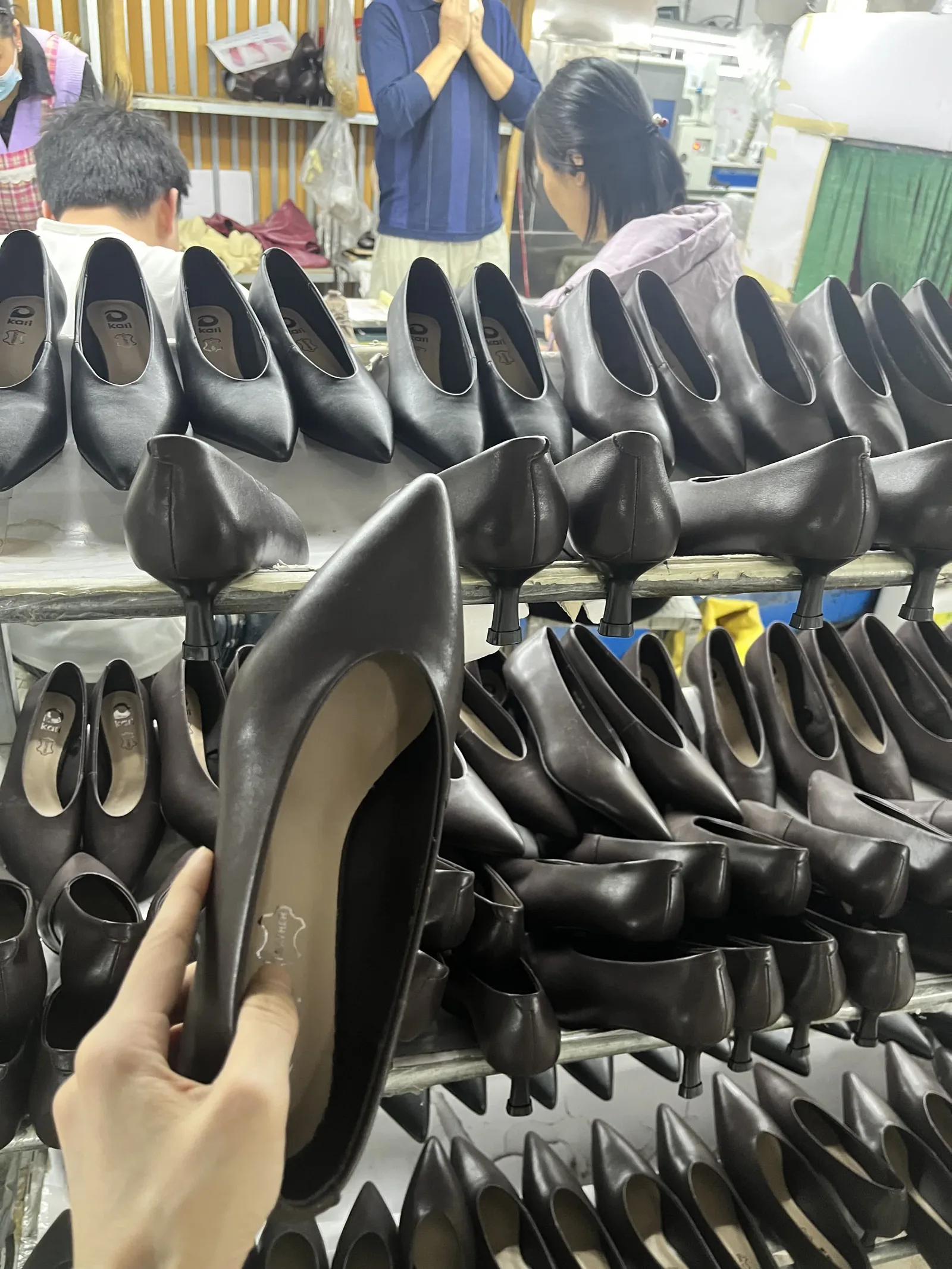
The reliable way to sell into Japan is to make inspection a designed step, not a rescue step. At our factory every pair passes a final inspection before packing — stitching, bonding, symmetry, surface, packaging — the process is described in our QC walkthrough. For Japan-bound orders we recommend layering on buyer-side verification: a third-party pre-shipment inspection, or an arrival inspection by your Japanese partner or inspection company. Both are normal practice; we support either, including inspector access to the line during production. Agree the standard in writing before production starts, and the sealed sample from step two becomes the objective reference everyone inspects against.
5. Sizing and Product Notes for the Japanese Market
Japanese footwear retail works in centimeter sizing, and women's collections skew toward the smaller end of the size curve compared with Western markets — confirm your size run with your factory per style rather than copying a domestic range. Fit matters the same way it does everywhere: the last decides toe room and instep volume, and Japanese customers transitioning from sneakers notice slim dress-shoe lasts immediately. Our guide to lasts and fit covers how to specify this. As always: approve fit on physical samples at the extremes of the size run.
At a Glance
- Japan = high expectations + high duties — prepare both, don't fear either
- Process: vet factory → sample & seal → written terms → production → inspection → sea freight → customs clearance → arrival check
- Duty planning is a real lever: classify your HS code before pricing; use RCEP preferential rates with the correct certificate of origin
- Consumption tax is paid at import at the standard rate — budget it into landed cost
- Inspection is culture, not distrust — pair-by-pair factory QC plus third-party or arrival inspection is the Japan norm
- Sizing: cm-based, smaller-leaning size runs; confirm per style and approve fit on samples
Questions Buyers Ask
"How much duty does Japan charge on leather shoes?"
Leather footwear is one of Japan's most heavily protected categories — duty rates are significantly higher than for general goods, and some leather shoe tariff lines carry a specific (per-pair) duty element. Preferential treatment under RCEP reduces rates on qualifying China-origin goods with the right certificate of origin. Always confirm the current tariff line for your exact HS code with Japan Customs or a licensed customs broker before pricing.
"What is the minimum order for a first shipment to Japan?"
For existing designs the MOQ at our factory is 100–200 pairs per style, which suits the Japanese market's test-and-repeat buying culture. New developments are quoted case by case. Many Japan-bound buyers start with a few styles in small runs, check sell-through, then reorder winners.
"Do I need a third-party inspection for Japan-bound orders?"
Japanese retail standards make inspection culture the norm, and third-party inspection is common practice for Japan-bound footwear. We support it fully: our own pair-by-pair final inspection runs regardless, and buyer-arranged inspection — before shipment or on arrival — layers on top. Agree the inspection standard and who bears the cost in the order terms.
Shipping to Japan? Start with the Right Spec
Tell us your styles, size run and target landed budget — we will quote with export documentation, RCEP certificate of origin and inspection support included.
Get a Wholesale Quote Send an Inquiry