
TL;DR — Leather soles breathe and look the part on dress shoes, rubber grips and outlasts everything, and combination soles put rubber where the shoe wears and leather where it shows. Specify per style and per climate — never one sole across a whole line.
The outsole is the only part of a shoe that touches the ground, yet it is often the last thing buyers specify. That is backwards: the sole decides grip, wear life, flexibility, sound, and a good part of perceived quality. Here is the honest factory comparison of the three main options — and how to choose per style.
Leather Soles: The Dress-Shoe Standard
A leather outsole is vegetable-tanned cowhide, compressed and cut to shape. Its advantages are real: it breathes better than any synthetic, it molds to the wearer's gait over time, it flexes naturally, and it looks and sounds like quality — the muted click of leather on a hard floor is part of a dress shoe's identity. Its weaknesses are just as real: it absorbs water, it wears faster than rubber, and it is genuinely slippery until the surface scuffs in. Specify leather soles for dress shoes, formal heels and premium lines sold in dry climates. Never specify them for work shoes, wet-weather boots, or any style marketed on practicality.
Rubber Soles: The Practical Default
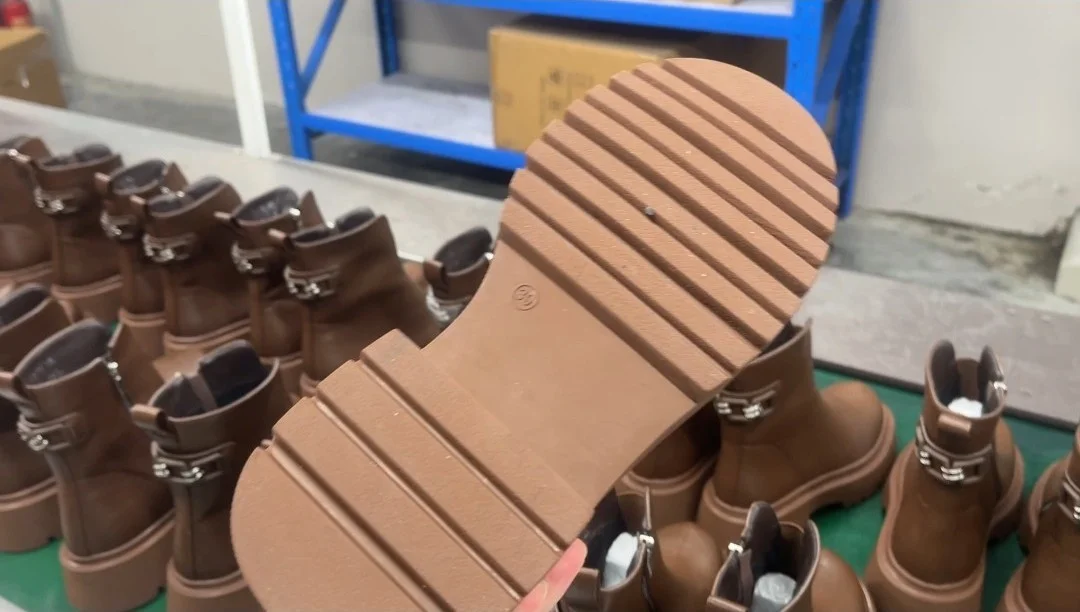
Modern rubber outsoles are not the clunky compromise they once were. Thin leather-look rubber soles sit convincingly under dress shoes; crepe rubber softens casual styles; lugged rubber makes boots weatherproof. Rubber wins on grip (wet and dry), wear life (typically several times leather), water resistance and price stability. It loses on breathability and — at the cheap end — on flexibility and weight. Two spec notes: ask for the rubber hardness (Shore A) — softer compounds grip better but wear faster, and a mid-range hardness suits most footwear; and check flexibility at the ball of the foot, because a stiff rubber sole makes even a well-lasted shoe feel dead.
Combination Soles: Rubber Where It Wears, Leather Where It Shows
The combination sole is the quiet best-seller of quality footwear: a leather waist and heel seat for looks and breathability, with a rubber forepart (and often a rubber heel top-piece) where the shoe actually strikes the ground. The customer gets the dress-shoe silhouette with everyday practicality. For many export markets — Northern Europe, the UK, Japan, the US Northeast — a combination sole is the single most return-reducing spec choice available on dress and business-casual styles.
How to Specify: A Per-Category Cheat Sheet
- Men's dress shoes (oxford, derby, monk) — leather for premium lines, combination for the volume tier
- Women's heels — leather-look rubber with a rubber forepart pad; pure leather only for formal/bridal
- Loafers — combination for dress loafers; flexible rubber for casual and driving styles
- Boots — rubber, always; lug or commando treads for winter, flat rubber for Chelsea and dress boots
- Work & uniform — rubber or PU with a certified slip-resistant tread; leather soles are a safety failure here, full stop
- Dance shoes — the exception that proves the rule: chrome leather (suede-finish) soles, chosen for controlled slide on dance floors
The Cost Angle
Sole choice moves unit cost less than buyers expect — typically a few percent either way — but it moves return rates and reviews enormously. A rubber forepart on a wet-market dress shoe costs almost nothing and removes the "slipped on wet pavement" complaint. If you are weighing where a shoe's price goes, our cost breakdown shows the full picture. When in doubt, ask us to make the sample in both sole options — sole A/B sampling is cheap insurance.
Not Sure Which Sole to Specify?
Tell us the shoe type and your market's climate — we will recommend the outsole and show options at sample stage.
Get a Wholesale Quote Send an Inquiry