TL;DR — The Oxford is closed-lace and most formal, the Derby is open-lace and most forgiving to fit, the Monk strap replaces laces with a buckle and sells on character. A balanced men's line usually leads with the Derby, anchors formality with the Oxford, and differentiates with the Monk.
Men's dress footwear looks like a wide category until you realize three constructions carry almost all of it: Oxford, Derby and Monk strap. Everything else — brogues, wholecuts, cap-toes — is a variation on these three. For buyers building or extending a men's line, knowing how the three differ in formality, fit and customer is the foundation. Here is the factory view.
The Oxford: Closed Lacing, Maximum Formality
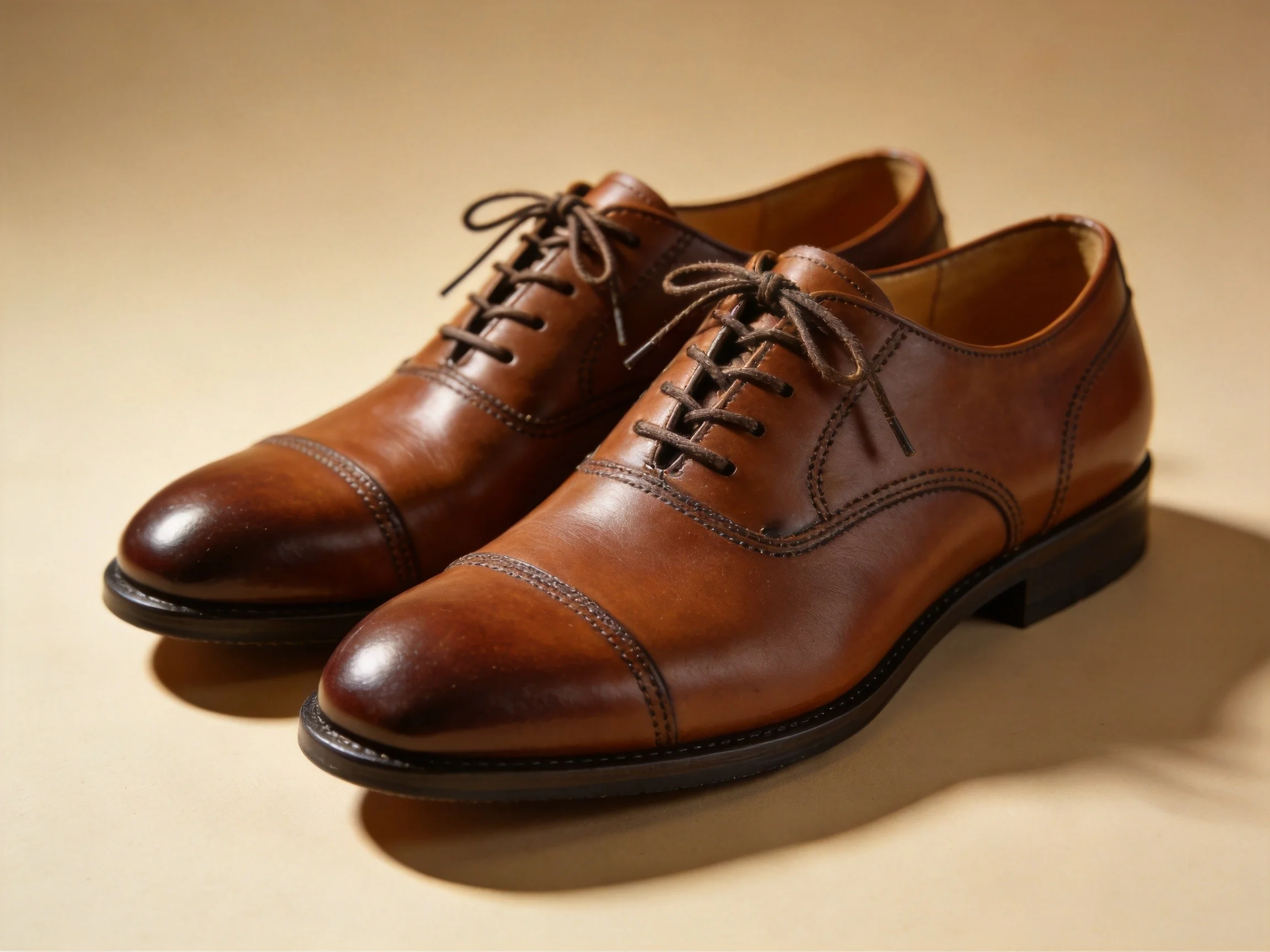
The Oxford's defining feature is closed lacing: the quarters (the flaps carrying the eyelets) are stitched under the vamp, so the lace-up area closes into a clean V. That construction gives the sleekest, most formal silhouette in men's footwear — the default for business formal, interviews and black-tie. The trade-off is fit: closed lacing opens only so far, so Oxfords accommodate high insteps poorly. In markets where customers have wider feet or high insteps, expect more fit-related exchanges on Oxfords than on any other dress style.
The Derby: Open Lacing, the Volume Seller
The Derby's quarters are stitched on top of the vamp, so the lacing opens wide when unlaced. That single construction difference makes the Derby the most forgiving dress shoe to fit: wide feet, high insteps and in-between sizes all get along with it. Slightly less formal than the Oxford, the Derby covers business, smart-casual and everyday office wear — which is why it is the volume style in most men's lines we produce. For a first order, a plain-toe or cap-toe Derby in black and brown top-grain leather is the safest bet in the category.
The Monk Strap: The Differentiator
The Monk strap replaces laces entirely with a buckle-and-strap closure — single monk (one strap) or double monk (two). It sits between Oxford and Derby in formality but outsells both on distinctiveness: the customer who buys a monk already owns the basics. Single monks read sleeker and dressier; double monks read younger and more fashion-led. Fit note: like a Mary Jane, the buckle strap is the stress point — it must be anchored into the construction, not just stitched to the facing, and the buckle should survive hundreds of fastenings. The strap gives some adjustability, but less than laces, so last fit matters as much as in an Oxford.
How Markets Differ
- Japan and Southern Europe — slimmer lasts, higher Oxford share; polish and finishing quality are scrutinized
- Northern Europe and North America — wider fits, Derby-led volumes, rubber or combination soles for wet climates (see our sole guide)
- Middle East — dress styles with comfort features; breathable linings matter in hot climates
Sourcing Notes
All three constructions are pattern-mature, which keeps sampling fast — 7–12 days — and lets materials do the differentiating: calfskin for the formal tier, top-grain cowhide for volume, suede for casual Derbies. Women's footwear is our core line, and we produce men's dress styles on the same lines on request. If you are building a men's capsule alongside a women's range, starting with a Derby and an Oxford in two colors covers most of the market with two patterns.
Adding Men's Dress Styles?
Send your reference styles or ask for our men's catalog — sampling in 7–12 days.
Get a Wholesale Quote Send an Inquiry