TL;DR — Who pays depends on three things: what your sample sheet says, whether the deviation is inside the agreed tolerance, and whose decision caused it. Inside tolerance, the buyer accepts the goods. Outside tolerance, the factory repairs, remakes or discounts. Changed your mind after sign-off? That one is on you. The ten minutes you spend writing tolerances at sign-off decide who pays three months later.
Everyone is friendly at sample stage. The sample is beautiful, the factory is responsive, and approving it feels like a formality. The relationship is only truly tested the day your cartons arrive and something is off — the color is half a shade deep, the sole edge is thicker, the lining feels cheaper. Now comes the only question that matters: who pays? We are a factory, and we sit on the other side of this conversation, so let us tell you how it actually gets settled — and how to make sure you never have to settle it by arguing.
1. First, Define "Not Matching" — Before Anyone Pays
"The bulk doesn't match the sample" is not a claim, it is three different claims wearing the same coat:
- Color deviation. Leather takes dye differently from batch to batch. The trade standard is the gray scale: grade 4 or better is generally accepted as commercially matching — visible only to a trained eye, side by side, under controlled light. Below that, it is a real deviation.
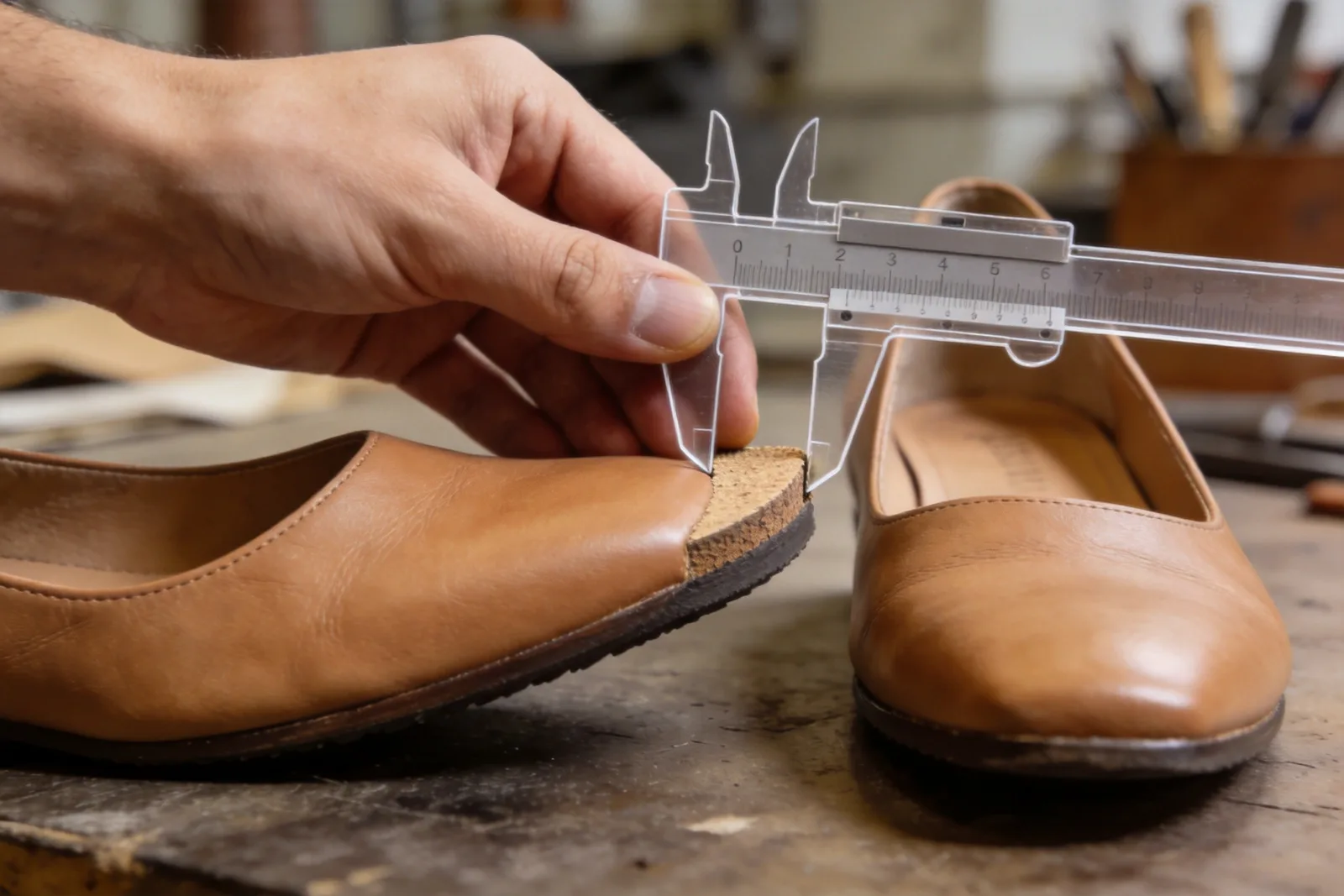
- Dimension and construction deviation. Sole edge thickness, heel height, stitch density, eyelet spacing. These are measurable in millimeters and stitches per inch, so they are the easiest to judge — if tolerances were written down.
- Material substitution. Quoted top-grain, delivered corrected grain. Quoted leather lining, delivered fabric. There is no tolerance for this one — it is not a deviation, it is a breach, full stop.
Notice what happened here: without written tolerances, "not matching" is an argument about feelings. With tolerances, it is a measurement. Everything below assumes you did the paperwork at sign-off. If you didn't, skip to section 4 and never skip it again.
2. Who Pays: Three Situations, Three Answers
Situation A — the deviation exceeds the agreed tolerance. That is the factory's responsibility, and there is no honest way around it. At our factory the rule is simple: if our production drifted beyond what the sample sheet allows, we repair or remake, and the freight is on us. Any factory that refuses this conversation is telling you something about how your next order will go.
Situation B — the buyer changed their mind after sign-off. The sample was approved, production started, and now the color should be warmer, the buckle should be gold, the heel should be lower. That is not a quality failure — it is a new development round on a running order, and the cost and the schedule reset sit with the buyer. This sounds harsh until you have watched a production line of 500 pairs stopped and re-lasted because of a message sent two weeks after approval.
Situation C — the gray zone. Natural grain variation nobody can fully control, or a flaw both sides genuinely missed at approval. This is where the sample sheet earns its keep: whatever it says governs. What it doesn't say gets negotiated — which is why the sheet should say a lot.
3. The Three Fixes: Rework, Discount, Rejection
When the deviation is confirmed, the industry settles on one of three outcomes, roughly by severity:
- Rework. The defect is fixable — hardware swap, re-lasting, re-finishing. The factory covers the labor and the round-trip freight. You lose time, not money.
- Discount. The shoes are sellable but not as approved — a shade off, a finish slightly matte. You accept the goods at a reduced price, negotiated case by case against the order contract. This is the most common settlement for minor deviations, because it saves everyone a second production run.
- Rejection and remake. Rejection is the nuclear option, reserved for severe non-conformity that cannot be reworked — sole separation, wrong materials, broken construction. A batch is not rejected over minor, fixable defects. When rejection is justified, remake or refund follows the terms written in your order confirmation.
One honest word about consequential losses — the missed launch date, the cancelled promotion, the shelf slot you already paid for. Industry custom does not cover these; the factory's liability is for the goods themselves, unless your written contract says more. The realistic protection is not a bigger claim clause, it is a buffer in your launch calendar and a dispute clause with clear response deadlines. Plan for the goods to be right, but schedule as if something might not be.
4. The Five Lines to Lock at Sign-Off
All of the above collapses into ten minutes at the sample table. When you approve the sample, write these five lines into the order documents — our 15-point approval checklist covers the inspection itself; these are the lines that decide who pays afterwards:
- Sealed sample ID. Two reference samples, signed and dated by both sides — one with you, one on the factory floor — with photos kept on file. A verbal approval is worth nothing: no signatures, no physical sealed sample, no reference, no case.
- Tolerance ranges. Gray scale grade for color, millimeters for dimensions, stitch density for seams. Numbers, not adjectives.
- Inspection method. How arrival inspection will sample the cartons — buyers increasingly use AQL sampling for this, a term worth understanding before it shows up in your inspection report.
- Remedy and deadline. How many days you have to raise a claim, and how many days the factory has to respond with a plan.
- Freight ownership. Who pays round-trip freight for rework. One sentence now saves a month of emails later.
5. If It Happens to You: The First 48 Hours
Suppose the cartons are open and something is wrong. Sequence matters more than anger:
- Don't break down the cartons, don't sell through. Photograph everything first — the goods next to your sealed sample, in the same light, same angle. Shoes that have been worn or sold are no longer evidence.
- Send a written claim that references the sample sheet — the sealed sample ID, the tolerance line, the photos. Factories respond to documents, not to volume.
- For anything disputed, bring in a third party. An SGS or TÜV inspection report — booked and paid by you — turns "your word against ours" into a neutral measurement. In our experience these reports end arguments in days.
- Judge the factory by its response speed, not its apology. A factory that replies within 48 hours with a plan will fix your problem. One that replies in a week with feelings will not.
At a Glance
- Define it first: color (gray scale), dimensions (mm) and construction are measurable; material substitution is a breach, not a deviation
- Who pays: beyond agreed tolerance — the factory repairs/remakes and covers freight; buyer's change of mind — the buyer pays; gray zone — the sample sheet decides
- Three fixes by severity: rework, discount negotiated per contract, rejection and remake
- Consequential losses (missed launches) are not covered by industry custom — protect yourself with schedule buffers instead
- Lock five lines at sign-off: sealed sample ID, tolerances, inspection method, remedy deadlines, freight ownership
Questions Buyers Ask
"The bulk color is slightly different from my sample — is that automatically a defect?"
Not automatically. Leather takes dye differently from batch to batch, so the trade works with tolerance grades: on the standard gray scale, grade 4 or better is generally accepted as commercially matching. Below the agreed grade, it is a defect and the factory fixes it. The key word is "agreed" — write the tolerance into the sample sheet, or every shade becomes an argument.
"Can I claim my lost sales if the shoes arrive off-spec and miss my launch date?"
In practice, almost never. Industry custom is that the factory's liability covers the goods themselves — rework, discount, or remake — not consequential losses like a missed launch window, unless your written contract says otherwise. The realistic protection is a buffer in your launch calendar and a dispute clause with clear response deadlines.
"The factory says 'leather is natural, every batch is different' — fair point or excuse?"
Half fair. Natural variation in grain texture is real, and no two hides are identical — that is within tolerance. But color depth, hand feel, coating and finish drifting beyond the agreed grade is not "nature", it is process control. This is exactly what the sealed sample and the tolerance line are for: they turn the argument into a measurement.
Work with a Factory That Puts It in Writing
Sealed samples, written tolerances, and a sample sheet that protects both sides — tell us your style list and we will show you ours.
Get a Wholesale Quote Send an Inquiry