
TL;DR — The numbers are universal: EU, US and JP sizes convert by one standard industry chart, and no factory invents its own. What is not universal is the last — the foot-shaped form a shoe is built on. Two shoes both labeled EU 37 can fit completely differently depending on last width, instep height and toe shape. So use the chart for numbers, and use the counter sample to lock the fit: put the size conversion table and the last specification on the sample sheet, signed by both sides, before bulk production starts.
Ask a room of shoe buyers what causes the most sizing disputes, and most will point at the wrong suspect: the conversion chart. In reality the numbers are the easy part — they are standardized, published, and the same in Chengdu as in Copenhagen. The arguments start somewhere else. This guide gives you the chart, then shows you where the real risk lives and how to close it before your order goes into production.
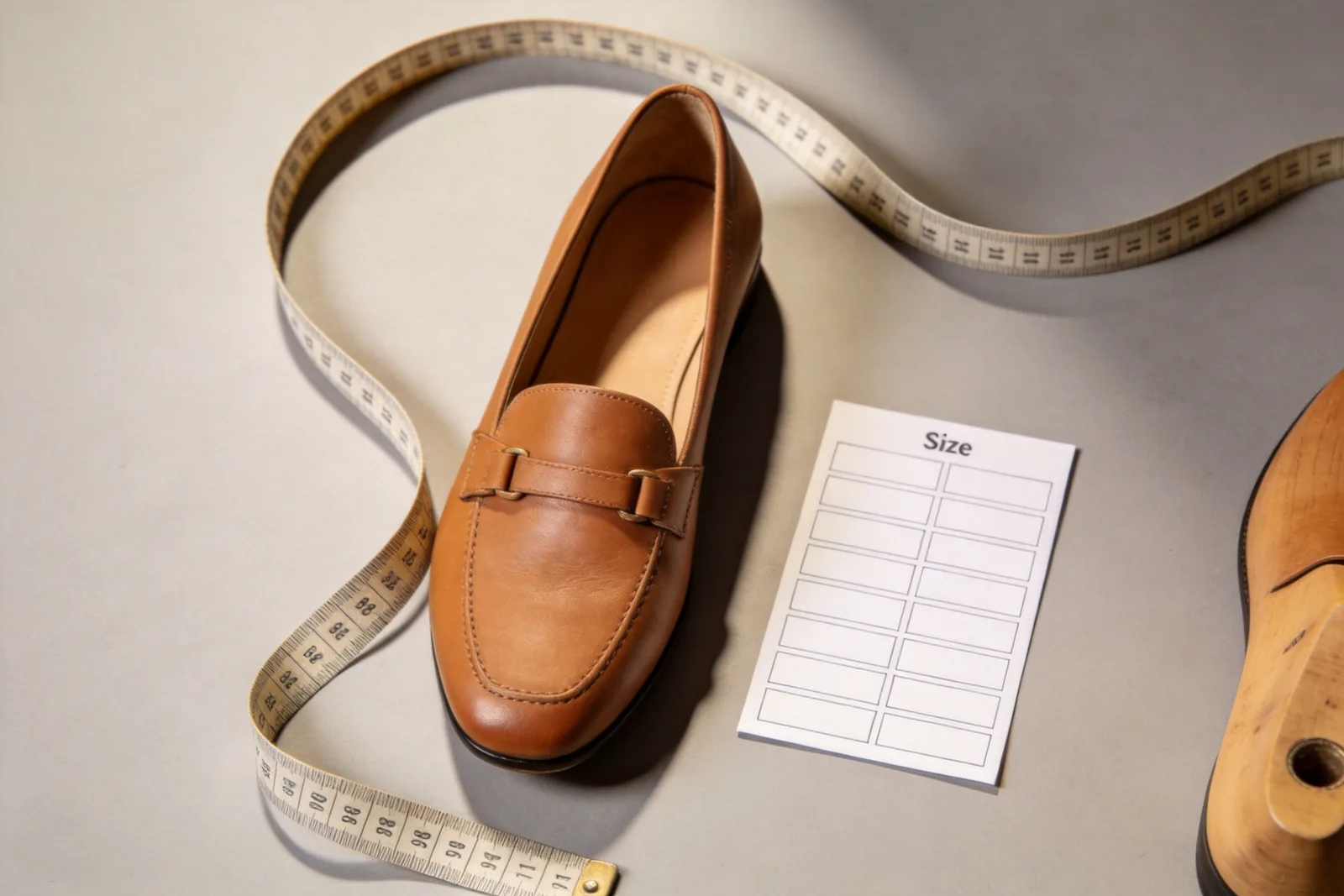
1. The Conversion Chart (Women's Sizes)
European sizes, Japanese sizes and the newer Chinese sizes are all defined by public standards. Japan and China measure foot length directly in centimeters or millimeters; the EU uses Paris points; US and UK run their own scales. Conversion between them follows one industry chart — a buyer in Osaka and a factory in Chengdu are looking at the same mapping.
| Foot length (mm) | EU | US Women's | UK | Japan (cm) |
|---|---|---|---|---|
| 216–220 | 35 | 5 | 2.5 | 22.0 |
| 221–225 | 36 | 6 | 3.5 | 22.5 |
| 226–230 | 37 | 6.5 | 4 | 23.0–23.5 |
| 231–235 | 37.5–38 | 7–7.5 | 4.5–5 | 23.5–24.0 |
| 236–240 | 38.5–39 | 8 | 5.5 | 24.0–24.5 |
| 241–245 | 39–39.5 | 8.5 | 6 | 24.5–25.0 |
| 246–250 | 40 | 9 | 6.5–7 | 25.0–25.5 |
| 251–255 | 41 | 9.5–10 | 7–7.5 | 25.5–26.0 |
| 256–260 | 42 | 10.5 | 8 | 26.0–26.5 |
Two honest caveats. First, brands round differently: one label's EU 38 maps to US 7.5, another's to US 8 — a half-size drift is normal between published charts, which is why the table shows ranges at the boundaries. Second, this chart is for numbers only. It tells you which label to print on the box. It says nothing about how the shoe inside will feel. That is decided by something the chart never mentions.
2. Why the Same Size Number Can Fit Differently
Every shoe is built on a last — a foot-shaped form, usually wood or plastic, that the upper is stretched and molded around. The last decides three things no size chart captures:
- Width. A slim last and a wide last both take an EU 37 upper. On foot, one hugs, the other swims.
- Instep height. The space over the top of the foot. A low-instep last on a high-instep foot means pressure and returns.
- Toe shape and heel grip. Round versus pointed toe boxes change how much real room the longest toe gets; heel width decides whether the shoe stays on while walking.
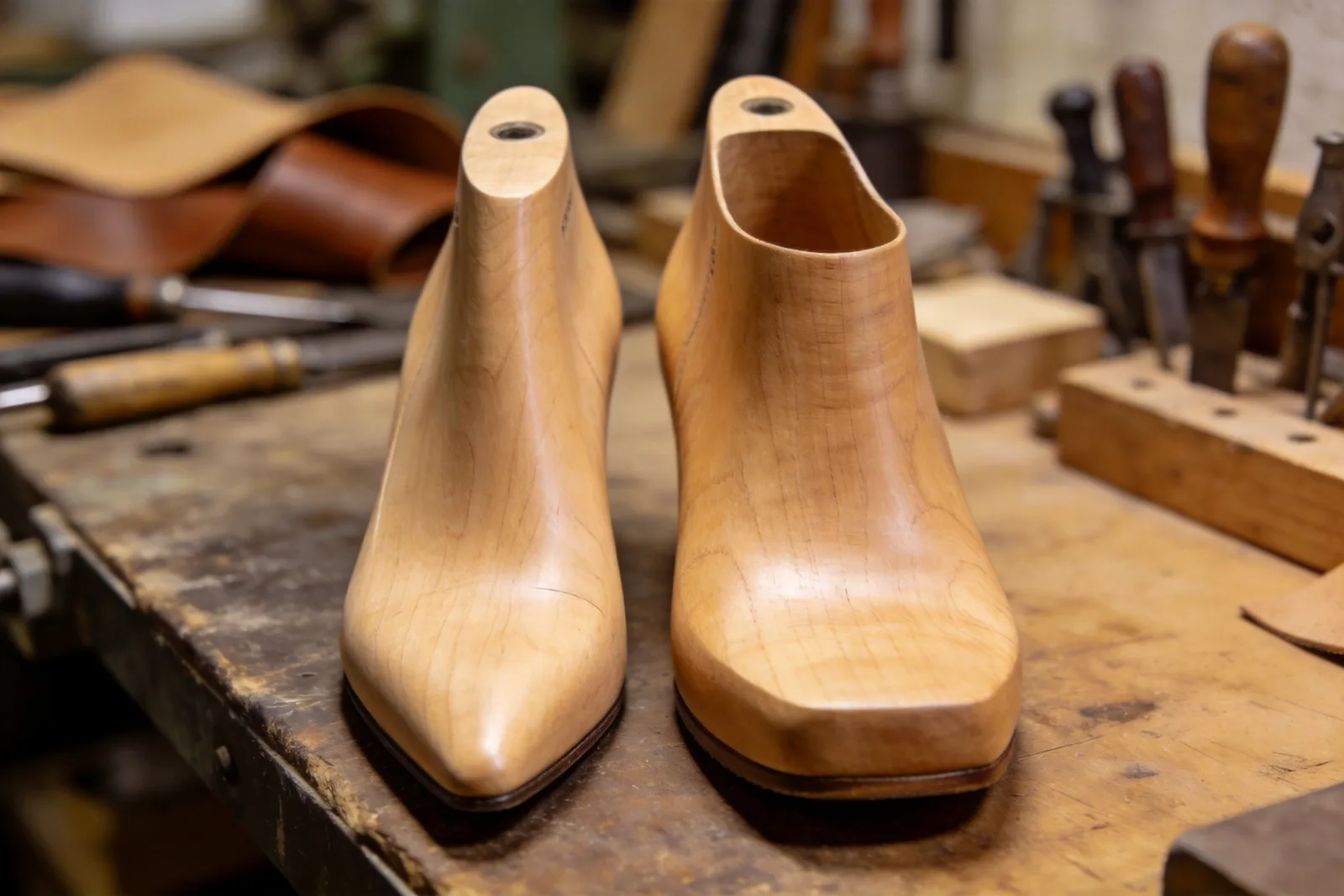
Two lasts for the same labeled size — slim on the left, wide with a higher instep on the right. The numbers on the box would be identical; the experience would not.
This is why "do you have EU/JP sizes?" is the wrong first question. Every factory does — the chart is universal. The question that separates a smooth launch from a returns pile is: which last will you build my order on?
3. Market by Market: Matching the Last to Your Customers
Foot shapes cluster by region. Not every foot follows the average, but your return rate will. The practical defaults:
- Japan. Generally narrower feet and lower insteps. Ask for a Japan-fit last: slimmer width, lower instep, snugger heel. A shoe built on a European wide last and merely re-labeled in JP sizes will feel loose and slip at the heel — the numbers are right, the shoe is wrong.
- Europe and North America. Generally wider feet and higher insteps. A standard or wide European last works for most of the market; comfort-led brands often go wider still.
- Mixed or global sales. Pick one primary market per production run and build to its last. A single last cannot be everything to everyone — pretending otherwise is how "runs small" reviews happen.
A factory that works across markets keeps multiple last families and will propose the right one for your target customer. If your supplier never asks which market you sell to before sampling, that silence is a risk signal in itself.
4. Planning the Size Run for Your First Order
Knowing the chart and the last, the next question is how to spread a small order across sizes. Trial orders of 100–200 pairs are normally assorted, not one size per style. The standard approach is a bell curve: the core sizes carry most of the volume, the two ends taper.
- With sales history: weight the curve by your own sell-through. Your past two seasons beat any generic table.
- Without history: start from your market's standard curve — for women's shoes in most Western markets that peaks around EU 37–39, in Japan around JP 22.5–24.0 — and ask the factory for their suggested split. We do this for first-time buyers as a matter of routine.
- Half sizes: decide per style. Fashion loafers and heels often carry them; sandals and mules usually skip them, since the open design forgives more.
Whatever curve you choose, write it into the order as a size breakdown — pairs per size per color — not a total to be sorted out later.
5. How to Lock Sizing at Counter Sample
Everything above becomes binding at one moment: sign-off on the counter sample. Alongside the fifteen physical checks you run on materials, stitching and finish, add two lines to the sample sheet:
- The size conversion table your boxes and listings will use — attached to the sheet, confirmed by both sides. This kills any "your 38 is not our 38" argument before it starts.
- The last specification — which last family, in which width and instep profile, the pair is built on. Japan-fit slim or European standard/wide, named explicitly.
Then have the sample tried on by a fit model from your actual target market. A chart cannot feel; a foot can. Once the sample is signed, that pair — and those two lines — become the reference for the whole run, exactly as the sealed sample governs what happens if bulk doesn't match. The full sequence from first email to delivery, including where sampling sits in the calendar, is mapped in our complete OEM guide.
At a Glance
- The conversion chart is universal — EU, US, JP and foot-length numbers follow one public industry standard; no factory invents its own
- The fit is not — width, instep height and toe shape come from the last, and lasts differ between factories
- Match the last to the market: slim, low-instep for Japan; standard or wide for Europe and North America
- Plan small orders as a size curve — core sizes carry the volume, weighted by your sell-through or a market-standard split
- Lock two lines at sign-off: the size conversion table and the last specification, both on the counter sample sheet
- Test on a real foot from your target market before you approve the sample
Questions Buyers Ask
"Is an EU 37 the same at every factory?"
The number is, the fit is not. The chart is a public standard, so EU 37 maps to roughly JP 23.5 and US women's 6.5 everywhere. But the same labeled size can feel completely different depending on the last — width, instep, toe shape. Confirm fit on a physical counter sample, never on a chart alone.
"We sell to Japan — what should we ask the factory for?"
A Japan-fit last: slimmer width, lower instep, snugger heel. The conversion numbers stay the same, but the shoe is built on a last shaped for Japanese feet. Name the last on the counter sample sheet, and have a local fit model try the sample before sign-off.
"Can we split sizes across a 100–200 pair order?"
Yes — trial orders are normally assorted on a size curve rather than one size per style. More pairs in the core sizes, fewer at the ends. Base the curve on your sales history if you have it; if not, we will suggest a standard curve for your target market.
Get the Fit Right Before You Order
Tell us your target market and style list — we will propose the last, the size curve and a counter sample you can test on real feet.
Get a Wholesale Quote Send an Inquiry