TL;DR — The right leather depends on the shoe type, not on which grade sounds best: top-grain cowhide for most boots and heels, calfskin for dress shoes, sheepskin for linings, suede for casual styles, and split leather or PU only where the price point demands it.
"Genuine leather" on a spec sheet tells you almost nothing. Cowhide or sheepskin? Full-grain or corrected? 1.2 mm or 1.8 mm? Two factories can both honestly say "genuine leather" and deliver shoes with completely different cost, durability and feel. This guide compares the leather types we actually cut every day on the production line — and, more usefully, which leather fits which shoe type.
The Main Leather Types, Compared
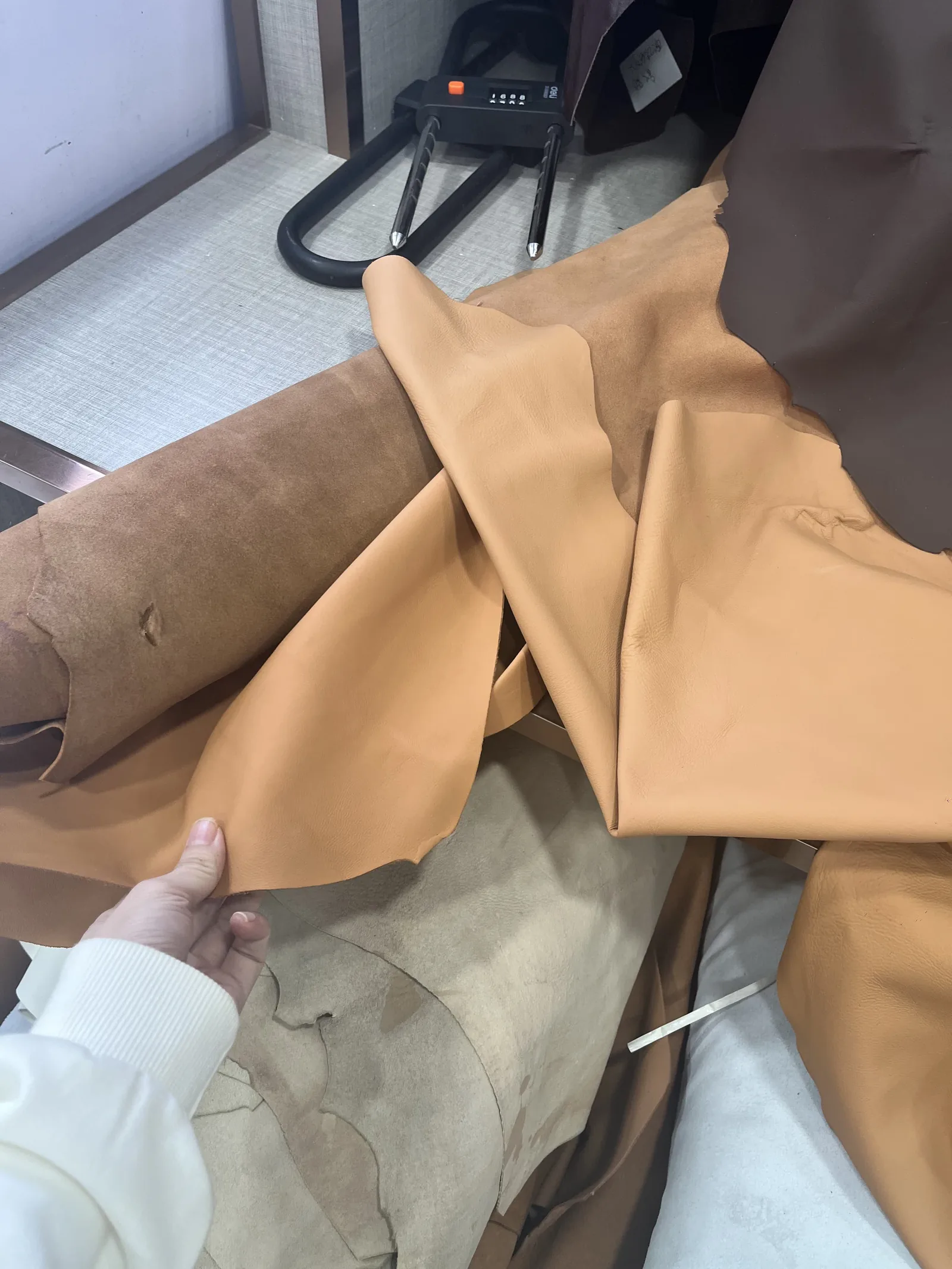
Full-grain cowhide is the top of the hide with the natural grain untouched. It is the strongest and most breathable option, develops a patina with wear, and costs the most. Best for premium boots, heritage-style casual shoes and high-end men's dress shoes. For a deeper dive into grades, see our full-grain vs top-grain comparison.
Top-grain cowhide is the same layer with the surface lightly sanded and finished. Slightly less rugged than full-grain, but more uniform in color and grain — which is exactly what most brands want for heels, loafers, Mary Janes and fashion boots. This is the workhorse of our production: the best balance of cost, consistency and durability for most women's footwear.
Calfskin comes from younger animals, so the grain is finer and the hand softer. It is the classic choice for dress shoes, ballet flats and refined heels where a smooth, elegant surface matters more than abrasion resistance.
Sheepskin (nappa) is buttery-soft and drapes beautifully. Too delicate for most uppers on its own, but unbeatable for linings, insoles and soft unstructured styles like flexible flats. When a customer says a shoe "feels like a glove", it is usually a sheepskin lining doing the work.
Suede is the flesh side of the hide, buffed to a nap. Casual, soft and visually rich — great for loafers, boots, Mary Janes and sneakers. It stains and water-marks more easily, so it suits dry-weather styles and customers who accept the care routine.
Patent leather is top-grain leather with a high-gloss coating. Stiff, formal and eye-catching — used for dress shoes, Mary Janes, bridal styles and dance shoes. It creases permanently and can crack in cold climates, which is worth flagging to buyers in northern markets.
Split leather & PU sit at the budget end. Split leather (the lower layer of the hide, usually coated) and PU synthetics keep costs down for price-sensitive lines. They are legitimate materials when specified honestly — the problem is only when they are sold as something they are not. See our genuine leather vs PU breakdown for the full comparison.
Match the Leather to the Shoe Type
After producing thousands of pairs across 13 categories, here is the mapping we recommend to brand owners:
- Boots (ankle, chelsea, long) — top-grain or full-grain cowhide, 1.4–1.8 mm; boots take abrasion at the toe and flex at the ankle, so skin strength matters most
- Dress shoes & formal heels — calfskin or fine top-grain; smooth surface, tight grain, takes a polish
- Sandals & birk-style footbed styles — thicker top-grain or suede straps; edges are exposed, so leather that burnishes cleanly wins
- Loafers, mules & Mary Janes — top-grain cowhide or suede; sheepskin lining makes the comfort difference customers remember
- Bridal & evening shoes — satin-backed calfskin, patent, or glitter-finished splits; appearance outranks durability for single-event wear
- Dance shoes — patent or soft nappa uppers with chrome leather soles; flexibility and grip are non-negotiable
- Work & uniform footwear — coated split leather or action leather; easy-clean surface and anti-slip outsoles matter more than grain prestige (and the outsole is rubber or PU — never leather)
- Budget fashion lines — quality PU on non-flex panels, leather where the foot bends; honest hybrid construction beats cheap "all leather" claims
Thickness and Finish: The Specs Buyers Forget
Two hides of the same grade behave differently at different thicknesses. Uppers typically run 1.2–1.6 mm for heels and flats, 1.4–1.8 mm for boots; go thinner and the upper wrinkles, thicker and it will not last properly over the toe. Finish matters just as much: aniline shows the natural grain but marks easily; semi-aniline adds light protection; pigmented finishes are the most durable and color-consistent for production runs. When you approve a sample, you are approving a specific hide at a specific thickness with a specific finish — write all three into your confirmation.
What to Ask Your Factory Before Confirming Material
- Which exact leather type, thickness and finish is quoted — and is it the same lot the sample was made from?
- Can you send swatch cards of the actual production lot before cutting?
- What is the upcharge for upgrading from top-grain to full-grain, or from pigmented to semi-aniline?
- For export markets: can the leather be tested on request (e.g. EU REACH chemical screening)?
- How is leather inspected and graded on arrival — and what happens to hides that fail?
A factory that answers these questions specifically — in millimeters, finish names and lot numbers — is a factory that controls its material supply. Vague answers here predict vague quality later.
Not Sure Which Leather Fits Your Line?
Send us your styles or reference photos — we will recommend materials and quote sampling in 7–12 days.
Get a Wholesale Quote Send an Inquiry